
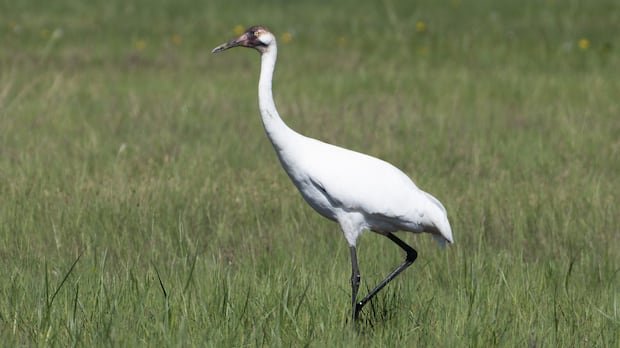

A striking five-foot-tall bird with vivid white feathers caught the attention of Calgary birder Jonah O’Brien. Learning of a whooping crane sighting along a rural road an hour northeast of the city on a Tuesday morning, O’Brien wasted no time in heading to the location. This marked his initial encounter with a whooping crane, a highly sought-after species among Canadian birdwatchers.
Typically, birdwatchers interested in spotting whooping cranes in Canada venture to Saskatchewan during the fall migration season. Therefore, the unexpected spotting of a whooping crane in Kneehill County during the summer was a delightful surprise for birders in the Calgary area. Describing the sighting as a “mega rarity,” O’Brien emphasized the bird’s distinctiveness due to its towering size and unique plumage features.
The whooping crane, towering at around five feet, holds the title of North America’s tallest bird. Its distinguishing characteristics include its large size, all-white feathers, facial markings, and black wingtips visible in flight. The sole remaining natural migratory flock of whooping cranes covers a 4,000-kilometer journey from their winter habitat in Texas to their nesting grounds in Wood Buffalo National Park annually.
During the summer, this flock of approximately 550 whooping cranes resides nearly 1,000 kilometers north of Calgary in the park bordering the Northwest Territories. This particular crane’s presence in a different location classifies it as a “vagrant” in the birdwatching community, denoting a bird observed outside its usual range.
Aside from the crane’s deviation from its typical habitat, birdwatchers are intrigued by this sighting for another reason. Gavin McKinnon, co-author of “A Field Guide to the Birds of Alberta,” views this bird as a symbol of successful conservation efforts. The whooping crane species faced a severe decline in the 1940s, with only about 20 individuals remaining due to hunting and habitat loss. However, stringent legal protections, habitat conservation, and intensive captive breeding programs have led to a remarkable recovery of the wild whooping crane population.
Despite a documented increase in population numbers, whooping cranes remain classified as endangered by the Canadian and U.S. federal governments, along with the Alberta government. McKinnon emphasizes the importance of respecting the bird’s space and not causing stress, particularly given its endangered status. Speculating that this specific whooping crane is likely a non-breeding young bird for the year, McKinnon recalls other unusual sightings in recent years in Alberta.
The birdwatching community eagerly anticipates the crane’s potential migration next year, possibly towards breeding grounds like Wood Buffalo National Park. The bird’s presence in southern Alberta for the summer suggests a temporary stay for feeding before continuing its migration.