
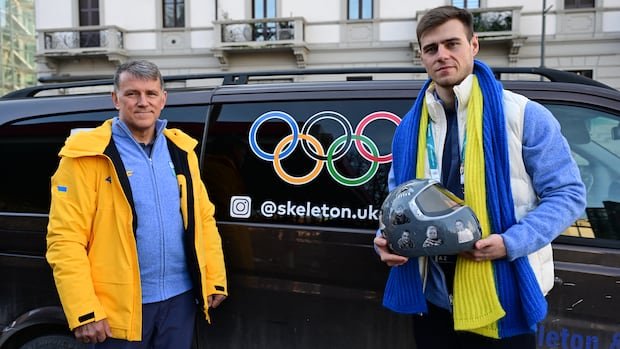

Ukrainian skeleton athlete Vladyslav Heraskevych brought his case to the highest court in sports on Friday, explaining his desire to wear a helmet honoring his country’s war victims at the Milan Cortina Olympics.
Despite being moved by his story, the arbitrator ruled against Heraskevych, ending his hopes for any success at this year’s Olympics. The Court of Arbitration for Sport upheld his disqualification from the men’s skeleton race, agreeing with the International Olympic Committee and the sliding sport’s federation that his proposed helmet displaying faces of Ukrainian coaches and athletes killed in the conflict with Russia violated Olympic regulations.
Heraskvych’s attorney, Yevhen Pronin, highlighted that the court supported the IOC’s decision to disqualify an athlete from the Olympics for reasons other than misconduct or safety concerns. The arbitrator aligned with the IOC’s policy on athlete expression during the games, concluding that Heraskevych’s “memory helmet” did not comply with the rules.
While sympathetic to Heraskevych’s intentions to honor the war victims and raise awareness, CAS stressed that the restrictions on his helmet were reasonable and proportionate. The athlete could still showcase his helmet off the racing surface, such as in interviews and on social media platforms. Heraskevych, disappointed by the outcome, acknowledged that he could not compete as planned.
Following the decision, Heraskevych left the Olympic Village in Cortina d’Ampezzo and traveled to Milan for a meeting with Ukrainian officials, including President Volodymyr Zelenskyy, who awarded him the Order of Freedom. Zelenskyy emphasized the resilience of Ukrainians and the importance of commemorating the athletes lost to the conflict with Russia.
Heraskevych’s disqualification stemmed from his refusal to comply with the IOC’s regulations on athlete expression, despite efforts by officials to find a resolution. While Heraskevych expressed disappointment with the outcome, he acknowledged the importance of upholding the rules set forth by the IOC.
The IOC’s decision to enforce rules on political statements aims to maintain focus on athletes’ performances during competitions and ceremonies. Heraskevych, although disheartened by the turn of events, recognized the need to respect the established guidelines, even if they conflicted with his personal beliefs.
Heraskevych’s case raised questions about the consistency of enforcement of IOC rules, especially regarding tributes and expressions by other athletes at the Olympics. While some displays were permitted, Heraskevych’s tribute helmet was deemed in violation of regulations.
Despite the setback, Heraskevych maintained his stance and criticized the IOC for what he perceived as a missed opportunity to support his commemoration efforts. The athlete’s determination to honor the war victims through his helmet design illustrated his commitment to raising awareness of the ongoing conflict in Ukraine.