
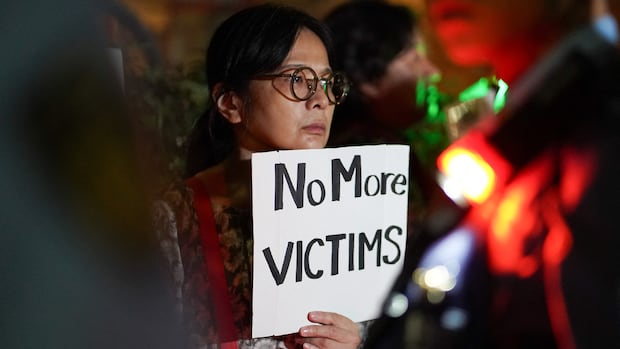

Throughout her life, 24-year-old Sorane Sakihama has been exposed to narratives concerning crimes against Japanese women perpetrated by U.S. military personnel stationed in Okinawa, Japan.
Thus, when a U.S. Marine was taken into custody this week on charges of robbing and murdering a local woman at a hotel in Naha, the capital of Okinawa, Sakihama felt compelled to act.
“As an Okinawan, I don’t want to witness any more victims,” she shared with As It Happens host Nil Köksal. “We must put an end to this history.”
Sakihama played a key role in organizing a demonstration outside the U.S. embassy in Tokyo on Tuesday, where hundreds gathered to seek justice and advocate for the removal of U.S. military bases from Okinawa.
This protest was part of a series of demonstrations occurring nationwide this week.
Approximately 160 individuals convened in Naha on Sunday, calling for the expulsion of U.S. bases from the island.
One placard stated: “We’ve had enough of this!”

A U.S. Marine has been arrested on suspicion of robbing and killing a local woman in Okinawa. The killing has drawn outrage on the island and inflamed longstanding tensions over U.S. military bases. Sorane Sakihama, who organized a protest outside the U.S. embassy in Tokyo, spoke to As It Happens host Nil Köksal.
Okinawa authorities have apprehended Lance Cpl. Devin Jacob Ballard, 20, who is based at Futenma Air Station, on allegations of strangling Anna Yagi, 39, on Saturday and taking her wallet and backpack. According to police, Ballard has denied the charges.
Sakihama, who was raised in Chatan, did not personally know Yagi but has encountered people who did.
“People describe her as a truly good, kind individual.”
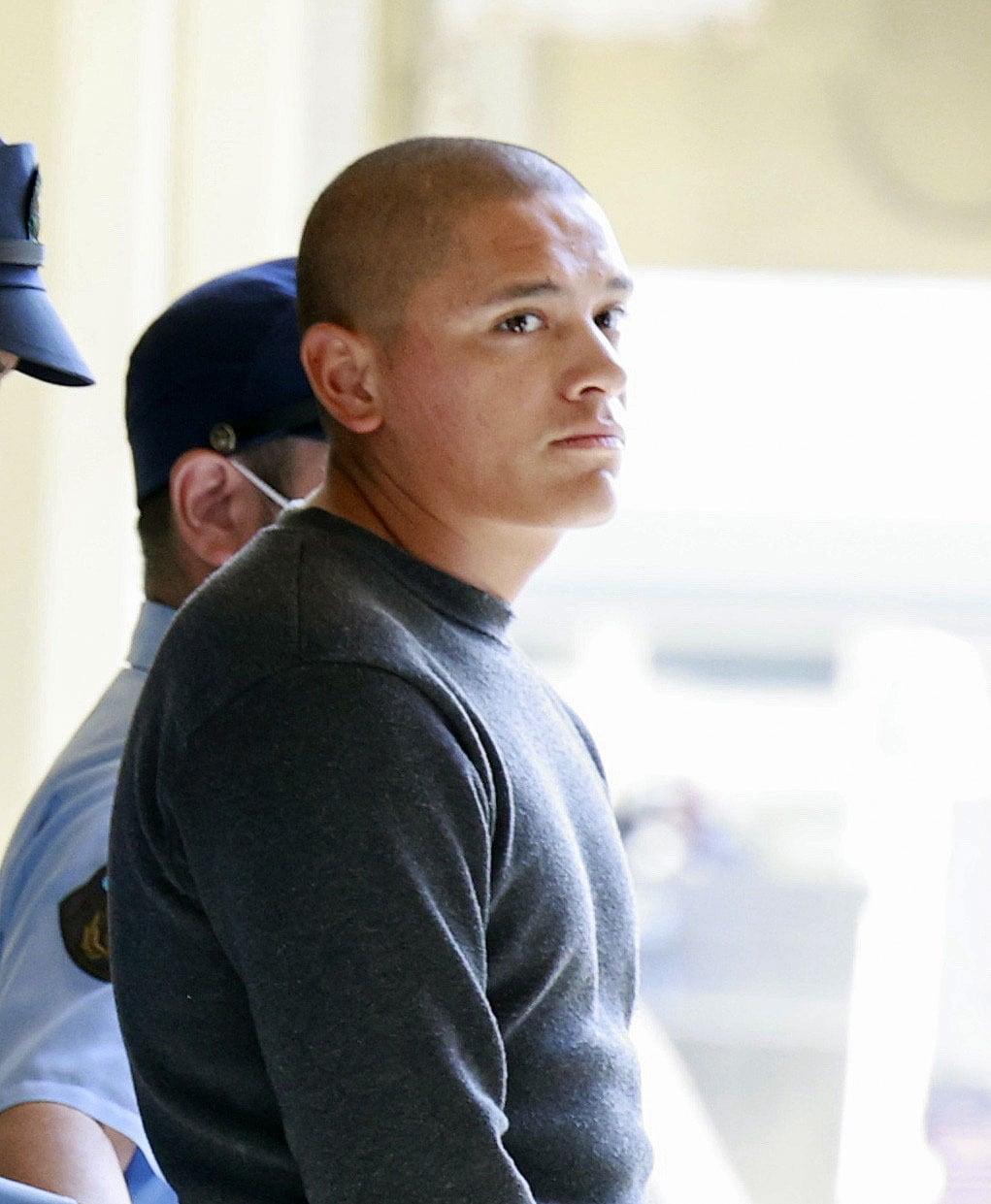
Devin Jacob Ballard, a U.S. Marine, has been arrested on suspicion of robbing and murdering Anna Yagi, 39. Police say he denies the allegations. (Kotaro Ueda/Kyodo News/The Associated Press)
This murder has provoked outrage in Okinawa and has intensified long-standing issues surrounding the military bases, which many residents regard as sources of noise, pollution, and violent crime.
Okinawa was under U.S. control from World War II until 1972. Currently, it houses 70 percent of the U.S. military facilities in Japan and is home to 18,000 U.S. Marines.
“My grandparents lived through World War II, and they say that the military never provided us protection,” Sakihama stated.
“They genuinely wanted to reclaim their land, but they were unable to.”
Prime Minister Sanae Takaichi referred to the murder as “an extremely brutal and vicious incident” and urged the U.S. to assist in the police investigation.
A History of Violence Against Women and Girls
According to local police, the number of criminal cases linked to U.S. military personnel in Okinawa increased to 101 last year, up from approximately 40 in 2020. However, the history of violence against women and girls by U.S. soldiers extends much further back.
In 1995, the rape of a 12-year-old Okinawan girl by three U.S. servicemen triggered widespread protests. In 2013, two U.S. sailors pleaded guilty to the rape of a Japanese woman in Okinawa.
In 2016, a worker at a U.S. air force base confessed to strangling Rina Shimabukuro, a 20-year-old woman whose remains were discovered in the underbrush.
In 2024, a member of the U.S. Air Force was charged with kidnapping and raping a teenage girl in Okinawa and was subsequently sentenced to five years in prison.
“Nothing has changed,” Sakihama remarked. “[As long as] we have bases in Okinawa, the situation will not improve.”
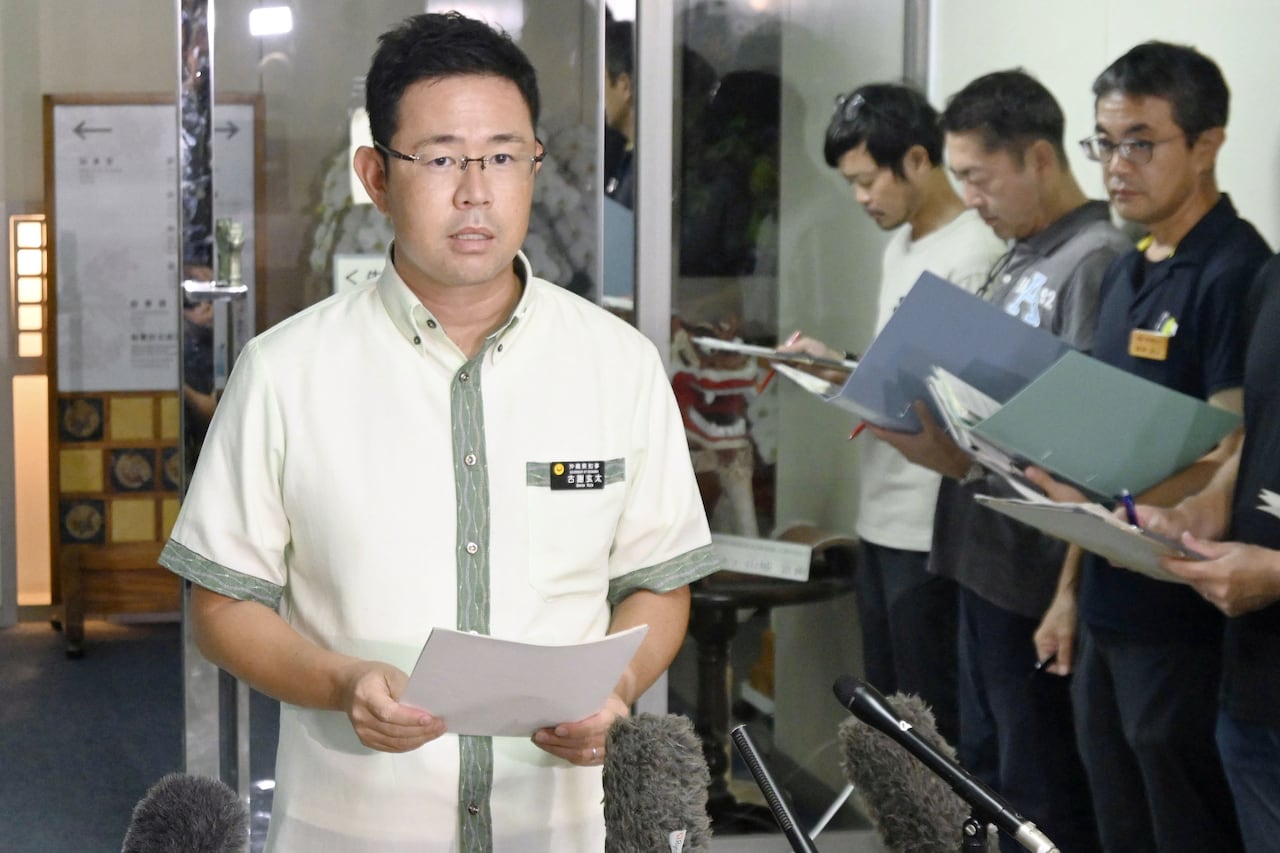
Okinawa Gov. Genta Koja, left, speaks to the media in Naha, Okinawa, on Sunday, calling the murder of a local woman ‘absolutely unforgivable.’ (Kyodo News/The Associated Press)
Okinawa Governor Genta Koja stated that this recent murder highlights the ineffectiveness of previous disciplinary actions taken by the U.S. military in response to similar offenses.
“This incident is a significant shock and adds to the fear felt by Okinawans who have already been compelled to live adjacent to U.S. bases,” Koja informed reporters on Sunday evening in Naha. “It is entirely unforgivable, and we are outraged.”
The U.S. embassy and the Marine Corps expressed their condolences regarding Yagi’s death and stated they are cooperating with Japanese authorities.
“The Marine Corps takes these allegations very seriously and expects every Marine to maintain the highest standards of conduct,” they declared in a written statement.
George Glass, the U.S. ambassador to Japan, posted on X that he has discussed with the U.S. military the importance of holding “our American service members to the very highest levels of discipline and integrity.”
What Lies Ahead?
Despite the strongly worded comments from Japanese and U.S. officials, Sakihama remains skeptical about the removal of the U.S. military from Okinawa.
“I do not anticipate any changes from them,” she stated.
Prime Minister Takaichi has been advocating for a strengthened Japanese military presence and collaboration with U.S. personnel on the island, which is seen by both Tokyo and Washington as vital for deterring potential military threats from China.
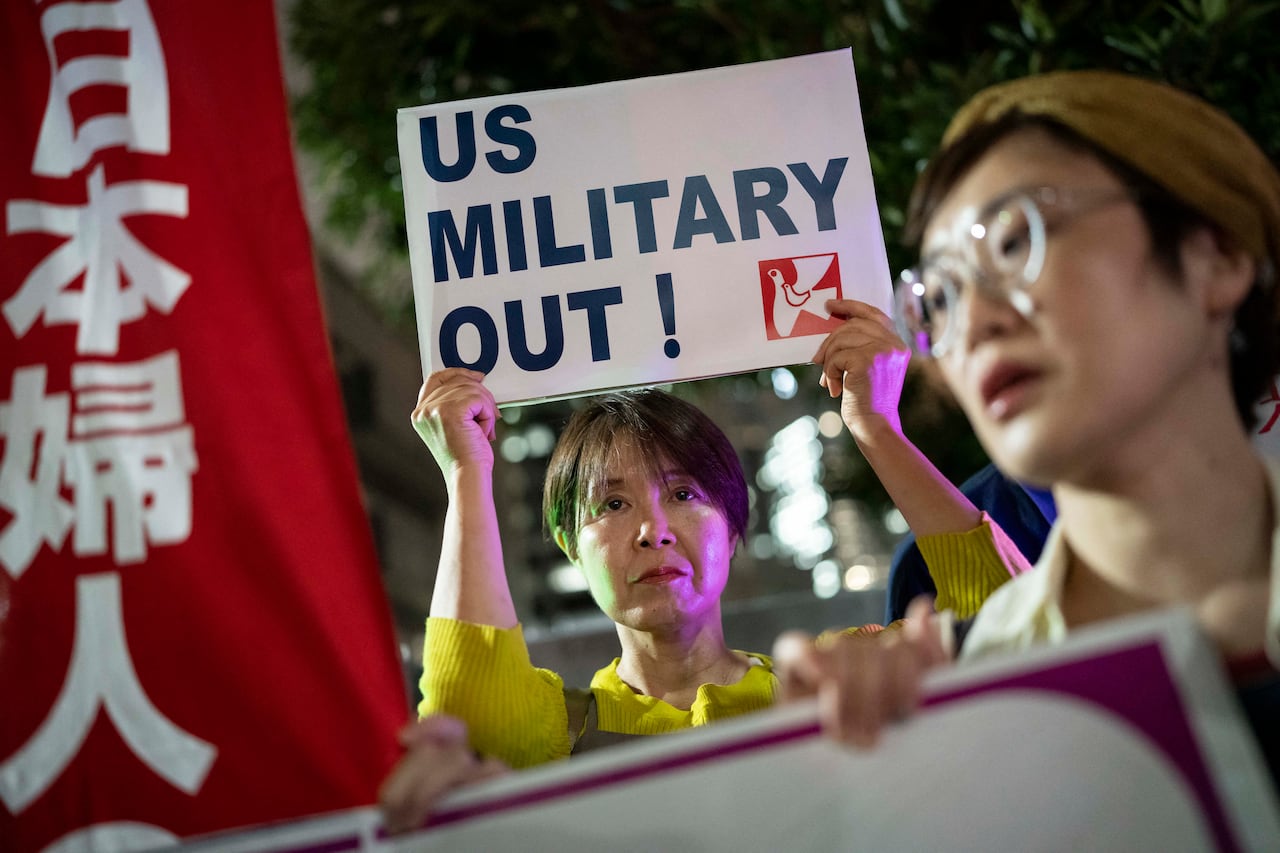
A woman holds a sign demanding the closure of U.S. military bases in Japan during a protest outside the Japanese prime minister’s office on Tuesday. (Yuichi Yamazaki/AFP/Getty Images)
The U.S. Marines reported that Ballard is still in Japanese custody.
His case will be addressed by Japanese authorities since he was off duty at the time of the crime and was arrested off base.
Japanese prosecutors will decide whether to file formal charges in the upcoming weeks.
If found guilty, Ballard could face a life sentence or even the death penalty.