
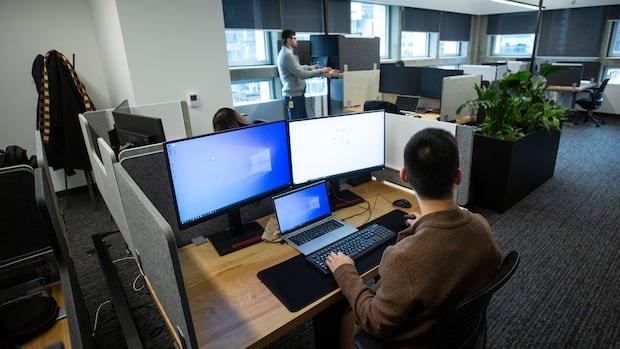

A recent study suggests that as more employees are required to return to the office full time, the underlying reasons may stem more from bosses’ quest for power and status rather than productivity. Researchers from the Wharton School at the University of Pennsylvania found that leaders with stronger narcissistic traits tend to oppose remote work.
The study utilized various methods to explore why some leaders resist remote work while others support it. This included examining public company reports for signs of narcissism in CEOs, analyzing their public statements on remote work, conducting personality surveys, and running online experiments to assess the link between resistance to remote work and leaders’ hunger for power and status.
The findings revealed that leaders displaying narcissistic tendencies were more resistant to remote work. The research emphasized that opposition to virtual work arrangements has both social and individual origins, highlighting a self-centered aspect that prior studies may have overlooked.
According to the researchers, narcissistic leaders are more inclined towards in-person work due to their desire for attention, affirmation, and control, which they believe is better achieved through face-to-face interactions. Remote work limits these leaders’ control capabilities, such as managing through physical presence or convening employees for direct commands.
Sylvia Fuller, a labor markets expert and sociology professor at the University of British Columbia, noted that the study sheds light on personal motives that drive employers to push for full-time office attendance, beyond organizational interests. She highlighted the interpersonal and personal motivations that leaders may have, suggesting a possible explanation for the current trend of employees being compelled to return to the office.
On the other hand, HR consultant Cissy Pau from Vancouver emphasized that employers have valid reasons beyond productivity for wanting employees back in the office, such as fostering collaboration and maintaining a sense of connection among employees. Pau pointed out that face-to-face communication facilitates better connection and collaboration compared to remote interactions, where spontaneous interactions are limited.
Overall, the research challenges the notion of mandatory full-time office attendance, especially in light of productivity gains during the pandemic when remote work saw a significant increase. The study underscores the importance of understanding the complex interplay between personal motivations and organizational dynamics in shaping workplace policies.