
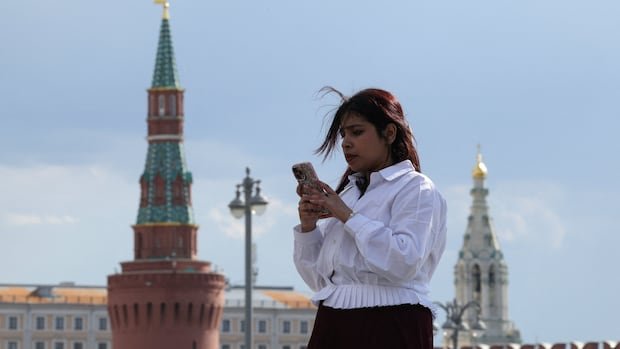

In central Moscow, residents faced a temporary block on their mobile internet services, restricting access to social media, online banking, and ride-hailing apps. This outage was the latest in a series of disruptions experienced by the city. During the outage, individuals sought refuge in establishments like fast-food chains and cafes that still had functioning Wi-Fi.
The government reinstated the mobile internet service later in the day, citing security concerns as the reason for the interruption. Telecom providers and banks in Russia had previously cautioned the public about potential service disruptions leading up to the upcoming Victory Day Parade on May 9, which is expected to be significantly scaled down this year. However, these outages seem to be part of Moscow’s broader strategy to control internet access and promote Kremlin-endorsed online platforms.
Amidst these developments, a 37-year-old teacher named Artem expressed skepticism about the official explanation provided by the government for the internet restrictions. He emphasized that many people around him shared similar doubts and concerns, highlighting a lack of trust in the authorities’ justification for the disruptions.
The ongoing limitations on internet access in Russia coincide with the country’s prolonged military involvement in Ukraine. The Kremlin’s efforts to shape the narrative surrounding the conflict have led to increased censorship aimed at restricting online content that contradicts the official stance.
The government has pointed to security reasons for the mobile internet restrictions, suggesting that mobile networks could potentially aid in targeting drone operations. Concurrently, there has been a crackdown on virtual private networks (VPNs) that allow users to bypass government-imposed restrictions on digital content. This move aligns with Russia’s broader agenda to establish a self-reliant internet ecosystem governed by domestic laws and platforms.
The recent internet outages and the government’s tightening grip on online activities have sparked discontent among the public, including criticism from within the state-aligned software industry. Natalya Kaspersky, a prominent tech figure, has raised concerns about the detrimental impact of these restrictions on internet functionality and public sentiment towards the authorities.
As VPN usage remains widespread in Russia, individuals like Artem, who work closely with tech-savvy students, emphasize the importance of VPNs in navigating online restrictions. Despite ongoing government efforts to curb VPN usage through regulatory measures and potential penalties, many Russians continue to find ways to access unrestricted online content.
Critics have likened Russia’s digital censorship to an “information autocracy,” drawing parallels to China’s Great Firewall. The government’s evolving censorship tactics aim to control citizens’ access to information, raising concerns about the suppression of free speech and diverse viewpoints. Despite these challenges, some individuals are actively seeking alternative means to circumvent internet restrictions and access a broader spectrum of information.