
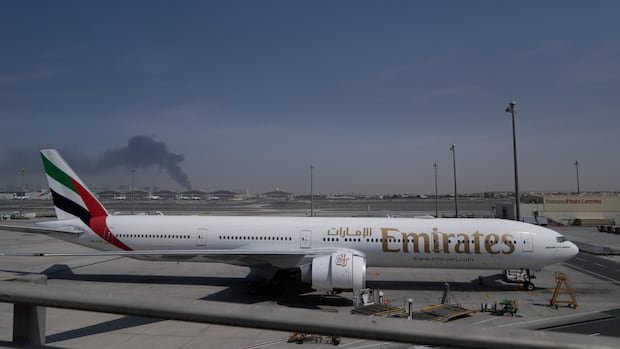

Air travel across the Middle East came to a halt on Saturday due to ongoing U.S. and Israeli airstrikes on Iran, and Iran’s subsequent retaliatory actions in the region. Among the stranded travelers is Raymond Grewal from Vancouver, who was returning from his honeymoon in the Maldives with a layover scheduled in Dubai. Initially anticipating a flight reroute upon learning of the conflict while onboard, Grewal found himself stuck for three days upon landing in Dubai as rumors circulated about potential airspace closures.
The situation escalated as Iran targeted major airports in the region, including those in Doha, Abu Dhabi, and Dubai, with missile and drone strikes, even hitting luxury hotels in Dubai. Consequently, over 9,500 flights were canceled in the Middle East since Saturday, as reported by the air traffic monitoring site Flightradar24. While some airlines slowly resumed limited flights by Monday night, the disruption continued to affect hundreds of thousands of passengers worldwide.
Grewal and his wife are among those awaiting departure, currently scheduled to fly out via Frankfurt on Wednesday, with hopes of an earlier rebooking by Air Canada. The airline, like others, has been adjusting its services due to the conflict, with flight suspensions to Dubai and Tel Aviv extended until March 23. Passengers affected by the turmoil are offered free flight changes or cancellations, with specific travel destinations impacted by the ongoing conflict.
Amid the chaos, travelers like Grewal faced additional challenges, including potential scams on social media platforms posing as airline customer support. Airlines like Emirates and Qatar Airways cautioned customers to be vigilant against fraudulent accounts seeking personal information, emphasizing official verification marks on their legitimate accounts. As the situation unfolds, affected airlines continue to adapt their services while ensuring customer safety and support.