
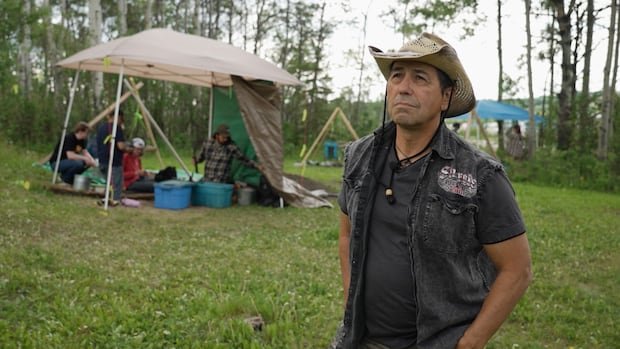

An archaeological field school located near Fort St. John, B.C., at a national historic site is providing insights into 12,500 years of First Nations history by uncovering ancient stone tools and animal bones. The site, Tse’k’wa, is owned by Doig River, Prophet River, and West Moberly First Nations, whose Dane-zaa ancestors resided there for many generations.
West Moberly Elder Laura Webb emphasized the significance of the site, stating that it validates their longstanding presence in the area for over 12,500 years. Tse’k’wa is among the 57,000 archaeological sites in the province, showcasing human settlement dating back to the last ice age. It serves as a platform for the nations to share their history, culture, and language with interested individuals.
While the public can visit the site, fieldwork is carried out by students from the University of Northern British Columbia. According to Webb, Tse’k’wa serves as a gathering place to educate about their culture and traditional way of life in harmony with nature.
The excavation has revealed evidence of ancient stone tools, animal bones from a prehistoric grassland, and rare obsidian fragments known for their sharpness. Notably, a stone bead discovered at Tse’k’wa, estimated to be 10,500 years old, is the oldest human adornment found north of the Yucatán Peninsula in Mexico.
Garry Oker of Doig River First Nation attested that the unearthed artifacts align with the oral traditions passed down through generations. Oker, the president of the Tse’k’wa Heritage Society, emphasized the importance of preserving the site for cultural teachings and community gatherings.
“Tse’k’wa,” which means “rock house” in Dane-zaa Záágéʔ, refers to the cave on the site. Alyssa Currie, the executive director of the Tse’k’wa Heritage Society, highlighted the site’s significance in reclaiming and sharing Dane-zaa cultural heritage with the public, connecting past practices with present-day traditions.
The archaeological findings at Tse’k’wa support the oral histories of the Dane-zaa people, reflecting their enduring presence in the region. Alyssa Currie noted the exceptional value of tying archaeological artifacts to preserved Dane-zaa stories within the community, spanning 500 generations of ancestors.