
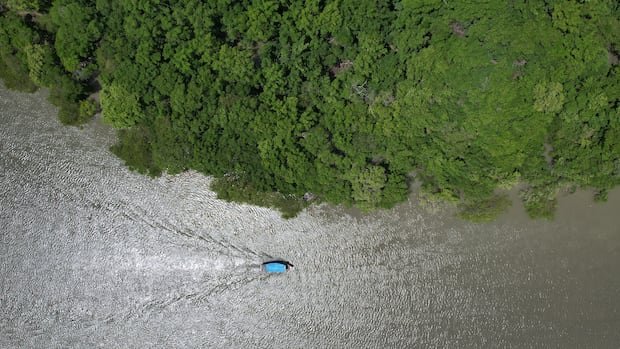

After years of decline due to human activities and severe weather conditions, recent findings from a new study analyzing satellite imagery of coastal forests reveal a positive trend in the growth of the world’s mangroves.
Lead author Zhen Zhang, a postdoctoral researcher at Tulane University, states that the study indicates early signs of success in restoration and conservation efforts for mangrove forests. Zhang highlights that beyond human interventions, mangroves have demonstrated resilience and natural recovery.
Mangroves play a vital role in supporting local communities by serving as essential habitats for marine life, including fish crucial for sustaining fisheries that feed millions of people. Additionally, they act as a protective barrier for coastal regions against flooding and storms, a function becoming increasingly significant as sea levels rise and extreme weather events intensify due to climate change.
Furthermore, mangroves are noted for their significant carbon storage capacity compared to other types of forests, making them crucial in combating global warming.
Utilizing data from NASA’s Landsat program, researchers constructed a comprehensive overview of the global mangrove forest canopy evolution over time. The study reveals that while mangroves experienced a decline since the 1980s, there has been more expansion than decline since 2010.
The analysis shows that approximately two-thirds of the mangrove expansion occurred in new coastal areas, with the remainder attributed to regeneration in existing forest zones. However, the study warns that despite the overall positive trend, certain regions, particularly in West and Central Africa, are witnessing mangrove losses.
Zhang emphasizes that extreme weather events pose a threat to mangroves, citing examples such as a winter freeze in Texas five years ago and sea-level rise leading to erosion in French Guiana in 2022-23. Therefore, while mangroves can regenerate naturally, safeguarding these gains remains essential.
Although the study’s findings are encouraging, biologist Heather Stewart from the U.S. Fish and Wildlife Service cautions that the recent mangrove expansion does not fully offset previous declines, emphasizing that the new areas may not offer the same ecosystem benefits as established forests.
Stewart stresses the importance of preserving mature mangrove forests for their resilience and unique contributions to local ecosystems. Despite the positive trajectory in mangrove cover, she underscores the necessity of halting deforestation and degradation of mature mangrove habitats to maintain their critical roles in supporting biodiversity and safeguarding coastal regions.