
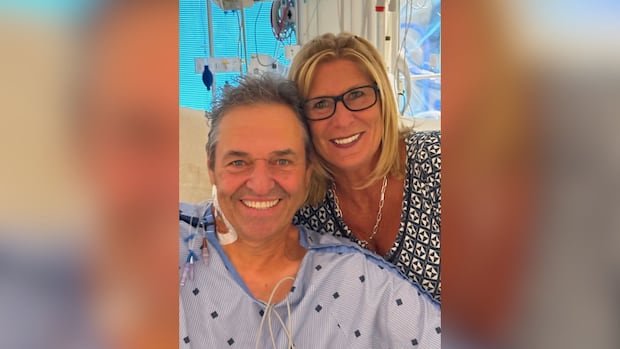

A man from Quebec, aged 64, has become the pioneer patient in North America to undergo a liver transplant using a regenerated liver, a groundbreaking technology that could potentially increase the availability of transplantable livers significantly in its initial year. Gérard Landry, residing in Nouvelle on Quebec’s Gaspé Peninsula, had struggled with liver issues for nearly 15 years, culminating in cirrhosis and liver cancer.
Before his liver transplant surgery, Landry was informed by his doctor that his new liver had been regenerated using a novel machine, first utilized at Montreal’s Centre hospitalier de l’Université de Montréal (CHUM). Expressing his surprise and gratitude, Landry likened the news to receiving a Christmas gift.
The innovative technology, named Liver Assist, permits medical professionals to treat and evaluate a donated liver externally before transplantation. For Landry, this meant receiving an organ that would have been deemed too risky for transplantation without this technology.
Dr. David Hénault, a hepatopancreatobiliary surgeon and liver transplant specialist at CHUM, spearheaded the project and carried out Landry’s surgery after three years of preparations. The Liver Assist system functions by linking a donated liver to a machine that circulates an oxygen-rich solution through the organ to reverse oxygen deprivation-related damages during its extracorporeal storage.
By simulating human body conditions, the technology enables doctors to switch to a blood-based solution and assess the liver’s functionality. Hénault highlighted that the liver given to Landry was particularly well-suited for this technology due to its vulnerability to oxygen deprivation during the transfer process.
CHUM, which conducts approximately 70 liver transplants annually, collaborated with Transplant Québec to evaluate previously declined livers for potential recovery using the new technology. The team estimates that the technology could make an additional 20 to 24 livers available for transplantation in its first year, with the potential for further growth in the future.
Hénault emphasized that the technology could reduce complications, reoperations, and hospital stays for suitable patients, as demonstrated by Landry’s swift post-transplant recovery. Landry’s blood work following the operation exceeded expectations, indicating a successful procedure, attributed in part to the assistance provided by the machine.
Currently recuperating in Montreal with regular hospital visits for monitoring and medication adjustments, Landry looks forward to returning to Gaspésie for ongoing recovery. Despite his eagerness to reunite with family, friends, and horses, he hopes his experience will inspire discussions about organ donation, emphasizing the importance of having available organs for advanced technologies to be effective in saving lives.