
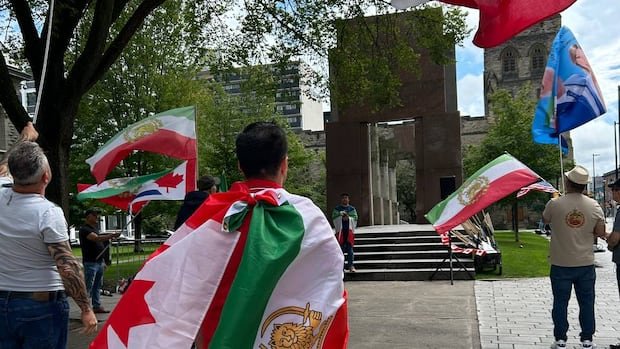

Hundreds of Iranian families residing in Canada have recently been notified by the federal immigration department that they could be denied entry to the country due to suspicions of terrorism affiliation. The families have a limited timeframe to refute these allegations before facing potential deportation.
Expressing her dismay, Sanam Mohammadzadeh, a resident of Windsor, Ontario, shared her disbelief at the situation, stating, “We chose Canada to live in a fair place, but now I realize there is no justice here.” She is among numerous Iranian families in Canada who are distressed about their uncertain future in the country, with plans underway for a protest at Parliament Hill on September 22.
The issuance of Procedural Fairness Letters (PFL) by Immigration, Refugees and Citizenship Canada (IRCC) has raised concerns among affected individuals. Approximately 50 such letters were reviewed by CBC News, all indicating that applicants are being deemed “inadmissible” based on their past conscription service with the Islamic Revolutionary Guard Corps (IRGC).
In response to the situation, experts highlight that conscription into the IRGC is mandatory for men aged 18 and above in Iran. The Canadian government classified the IRGC as a terrorist organization in July 2024, a move that has impacted individuals who previously served with the IRGC but are no longer affiliated. Former Justice Minister Arif Virani expressed reservations about the implications of this designation on conscripts.
The affected families, including Mohammadzadeh and her husband, have been waiting for permanent residency approval since 2024. They question why they were allowed entry into Canada initially if their conscription status is now deemed problematic. Mohammadzadeh expressed feeling “betrayed” by the sudden labeling of her husband as a terrorist based on past conscription.
CBC News has spoken with over 30 impacted individuals who all received PFLs on the same date, giving them a month to prove their non-affiliation with the IRGC. Despite efforts such as protests and reaching out to local MPs, more than 400 families remain in a state of uncertainty.
In an official statement, IRCC emphasized its commitment to the safety and security of Canadians and the fair application of immigration laws. The department clarified that PFLs are not final decisions of inadmissibility, and each case is evaluated based on individual circumstances. However, the use of standardized letter templates aims to provide clarity on the concerns raised.
Activists, including lawyer Kaveh Shahrooz, have criticized the government’s handling of the situation, describing it as “careless and negligent.” They argue that innocent individuals who served under mandatory conscription are unfairly impacted by the IRGC’s terrorist designation.
Immigration experts like Zeynab Ziaie Moayyed have raised concerns about the “blanket approach” adopted by IRCC, which has caused distress among families and may lead to processing delays and resource constraints at the Canada Border Services Agency (CBSA).
As affected individuals navigate this challenging situation, legal counsel is recommended to ensure comprehensive responses to PFLs within the stipulated timeframe, potentially avoiding prolonged limbo periods and complications for those with expiring permits.