
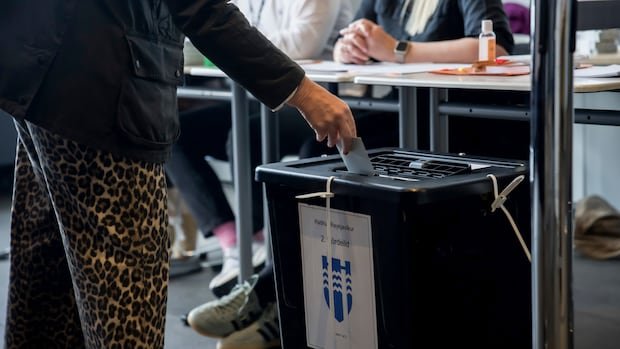

Voters in Iceland headed to the polls on Saturday to determine whether to restart talks about joining the European Union, against the backdrop of U.S. President Donald Trump’s recent interest in controlling Greenland.
The referendum question for the approximately 265,000 eligible voters is straightforward: Should Iceland resume negotiations with the European Union for membership? A positive vote would initiate discussions with the European Commission on various aspects like the economy and human rights. Proponents believe that EU membership could offer protections in case of similar threats from Trump and ensure economic stability.
In the event of a rejection by voters, the issue will be put on hold for at least a generation. Critics are concerned about the potential impact on Iceland’s valuable fishing industry and argue that the country already benefits from being part of the EU’s single market and the Schengen area for free movement.
Anticipated to be a closely contested decision, over 20% of voters have already cast their ballots before the referendum day, according to Iceland’s national broadcaster RÚV.
The discussion around Trump’s statements regarding Greenland has stirred unease in Iceland, located just 290 kilometers from the Danish territory. The uncertainty surrounding Trump’s interest in Greenland has raised fears in Iceland about the possibility of similar actions being taken against them.
The current left-leaning coalition government in Iceland, elected in 2024, views EU membership as a safeguard against potential future threats. They advanced the EU referendum, originally planned for the following year, in response to these concerns.
Debates on EU membership have been ongoing in Iceland, with the country officially ending its previous attempt to join the EU in 2015 due to concerns about the impact on its fishing industry. Fishing is not only crucial to Iceland’s economy but also deeply ingrained in its cultural heritage.
The possibility of joining the EU’s common fisheries policy has been a contentious issue, as it could mean opening up Icelandic waters to trawlers from other EU countries. The government has indicated its intention to negotiate special arrangements, including a possible exemption from certain EU policies.
As the referendum day approaches, Prime Minister Kristrún Frostadóttir has emphasized to voters that the referendum is not a final decision and that another vote will be held if Iceland reaches a membership agreement with the EU.
For many Icelanders, the referendum is not just about EU membership but also about preserving their national identity and culture. The country’s history of standing up to larger European nations, exemplified by the Cod Wars with Britain, is a point of pride for many.
While proponents of EU membership argue for closer ties with European neighbors to address shared challenges like climate change, opponents believe that Iceland already benefits from existing collaborations without sacrificing sovereignty. The debate continues between those advocating for closer EU integration for stability and those preferring Iceland’s current independent stance.