
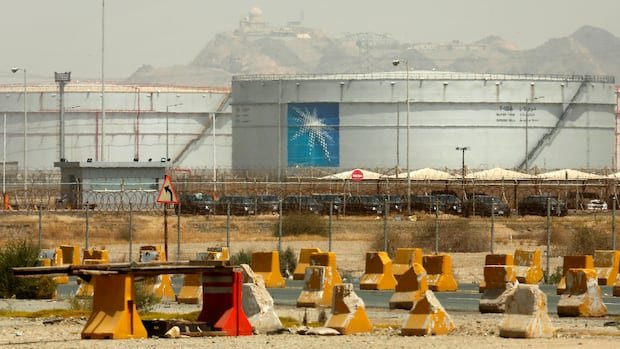

Yemen’s Houthis, supported by Iran, carried out assaults on four southern cities in Saudi Arabia, a key ally of the United States, causing injuries to over 70 individuals and igniting oil facilities. This marked a significant escalation in the ongoing conflict in the Middle East. The Houthis, who hold control over most inhabited regions in Yemen, including the capital, announced a broad operation deep into Saudi territory. Utilizing drones and missiles, they targeted a Saudi airbase in Khamis Mushait and facilities owned by Saudi Arabia’s state oil company in Abha, Najran, and Jazan, a crucial Red Sea port.
Reports from Saudi authorities confirmed the fires at the sites, revealing that 73 people, including women and children, sustained injuries. The scale of casualties indicated that these attacks were among the most severe incidents against Saudi Arabia since the commencement of the conflict involving the United States and Israel against Iran in February. While visual evidence of the aftermath was not immediately accessible, the Houthis shared images of an explosion purportedly involving trucks from Saudi Arabia that they had targeted at the border in a different area.
The assaults by the Houthis on the southwest of Saudi Arabia have the potential to exacerbate the global economic repercussions of the conflict by disrupting energy supplies in the Middle East beyond the blocked Strait of Hormuz. Following a period of relative calm in August, hostilities in the Gulf have reignited, with Iran and the U.S. engaging in exchanges of fire, driving global oil prices above $99 per barrel, a surge of more than two percent on Tuesday.
The conflict has led to a scarcity of crude oil worldwide, particularly affecting refined fuels. Diesel prices in the United States have spiked to a record average retail price of over $5.90 per gallon, less than two months before critical midterm elections that could impact the dominance of the Republican Party led by Donald Trump in the U.S. Congress.
Saudi Arabia has spearheaded an Arab coalition combatting the Houthis in Yemen for over a decade. Although the conflict had somewhat subsided in recent years, a ceasefire has collapsed, with the Houthis posing threats to shipping at the mouth of the Red Sea. Colonel Turki al-Malki, the spokesperson for the Saudi-led coalition, affirmed that necessary operational actions would be taken to deter the “terrorist militia” and confront their hostile actions decisively.
Houthi spokesperson Yahya Saree accused Riyadh of escalating the conflict by launching airstrikes on Yemen, vowing retaliation from the Houthi side. The confrontation in the Gulf has evolved into a clash of wills between the U.S. and Iran, each aiming to compel the other to yield under economic pressure from competing blockades. Washington seeks to enhance the flow of oil to global markets by safeguarding ships through the Strait of Hormuz, while simultaneously obstructing Iran’s exports beyond it.
Tehran has unveiled plans to seal off the strait, announcing an upcoming “maritime exclusion zone” extending from the U.S. blockade perimeter through the strait and into the Gulf. Recent confrontations involved the U.S. firing at Iranian tankers in response to Iranian attacks on American warships, with Iran claiming to have employed more advanced ballistic missiles for the strikes.
The ongoing conflict poses challenges despite the U.S. targeting Iran’s conventional forces and economic infrastructure. Iran’s possession of missiles and drones capable of threatening oil tankers transiting the Strait of Hormuz and attacking U.S. military installations in the region remains a significant concern. Roughly one-fifth of global oil and liquefied natural gas shipments previously traversed the strait before the escalation of hostilities.
The latest clashes between the Houthis and Saudis have displaced around 18,500 individuals in Taiz and Hodeida in southwestern Yemen, adding pressure on communities in southern Taiz and the West Coast. The International Organization for Migration reported that displaced families arrive without basic necessities, having been uprooted multiple times before, amid the ongoing civil conflict in Yemen. The war in Yemen commenced in 2014 when the Houthis took control of the capital, Sanaa, and parts of northern Yemen, leading to the government’s exile. A Saudi-led coalition intervened in the subsequent year to reinstate the government, resulting in a conflict that has claimed the lives of at least 150,000 individuals according to UN estimates and brought the country to the brink of famine.