
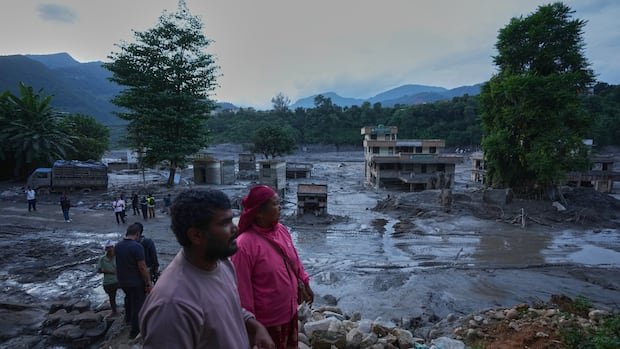

Geoscientist Jakob Steiner describes the recent event in Nepal’s Himalayas as resembling a massive piece of a glacier being cut and dropped from a mountain cliff, causing a destructive blast of ice, rock, and sediment to crash down 1.2 km from a height of 5,000 meters above sea level. This led to the temporary damming of a river and the formation of a lake. When the lake filled with water released from the glacier, the dam broke, unleashing a violent torrent that devastated downstream villages and buried them in mud.
The aftermath of this calamity has led to the formation of additional lakes that could potentially rupture, exacerbating the death toll and destruction. The disaster has claimed the lives of at least 579 people, with around 1,400 individuals missing in Nepal, including 32 Canadian citizens and permanent residents.
Indigenous residents have long warned of the dangers posed by Langtang Lirung, referring to it as an “angry mountain,” a sentiment echoed by Steiner. While some climate scientists are cautious about attributing this collapse solely to human-caused climate change, experts studying glacier hydrology and the impacts of global warming on the cryosphere have long warned about such catastrophic events, particularly in the Himalayas.
John Pomeroy, director of the University of Saskatchewan’s Centre for Hydrology, emphasizes that events like this are becoming more frequent due to the destructive effects of climate change on natural infrastructure, which are occurring rapidly and challenging human adaptation.
The region where the tragedy occurred, part of the larger Hindu Kush Himalaya region, has been significantly impacted by warmer global temperatures linked to fossil fuel emissions, leading to altered precipitation patterns, increased snow melt, more avalanches, and accelerated glacier retreat. The loss of glacier coverage in the Himalayas has been substantial, with 21% disappearing in the early 21st century due to rising global temperatures.
Glacial lake outburst floods (GLOFs) have become a growing threat due to increased ice loss and the expansion of glacial lakes caused by global warming. Research indicates that millions of people living near these vulnerable areas, primarily in the Himalayas, the Andes, and the Alps, are at risk of GLOFs. The devastation caused by such floods poses long-lasting consequences, affecting water resources for drinking and irrigation and highlighting the urgent need for global action to mitigate climate change.
Steiner emphasizes that prevention measures could have averted the disaster in Nepal, stressing the importance of proactive decision-making and early warning systems. Collaboration with Chinese agencies on the trans-boundary area is crucial, alongside efforts to reduce greenhouse gas emissions and limit further global warming. The tragic incident underscores the necessity for global cooperation to address climate change and reduce the risks posed by such catastrophic events.