
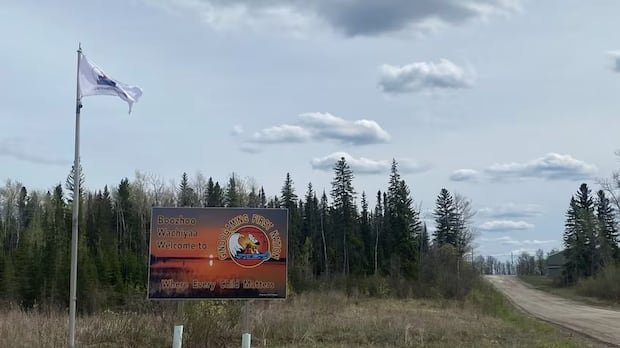

Ginoogaming First Nation has announced that the Ontario Provincial Police (OPP) has tentatively agreed to establish a comprehensive, formal policing strategy to tackle the safety issues facing the community. The Ojibway community, situated northeast of Thunder Bay, had previously declared a state of emergency in May 2024, citing concerns related to violence and drug trafficking.
Chief Sheri Taylor of Ginoogaming recently met with OPP commissioner Thomas Carrique to advocate for urgent action and financial assistance. The First Nation disclosed that it had allocated approximately $1.6 million towards its own security initiatives since May, including engaging the services of Anishinaabe Ambassadors Inc. to combat illicit drug-related activities.
During a virtual press briefing on Thursday, Taylor expressed that the financial burden placed on the First Nation was substantial, emphasizing that resources were being diverted from essential areas like housing, infrastructure, and economic development to address the public safety crisis. Carrique reportedly assured Taylor of forming a collaborative safety partnership with Ginoogaming, involving key OPP officials and setting a 30-day timeframe for a subsequent meeting.
Ginoogaming primarily receives policing services from the Anishinabek Police Service (APS), with supplementary support from the OPP. The APS functions under the federal First Nations and Inuit Policing Program, which has yet to categorize First Nation policing as an essential service, leaving communities such as Ginoogaming lacking the requisite enforcement and support.
The First Nation highlighted the necessity for sustained backing from the OPP to maintain and expand safety measures, which include checkpoint operations, K9 handler services, nighttime surveillance, peacekeeper support, and youth intervention and rehabilitation programs. While acknowledging the promising commitments from the OPP, Taylor stressed the immediate need for enhanced safety measures.
Moreover, Indigenous Services Canada (ISC) disclosed plans for a forthcoming meeting involving provincial, federal, and Ginoogaming representatives to focus on community safety planning, with an emphasis on collaborating with the OPP. Since May 2024, ISC has facilitated three deployments of community support personnel in Ginoogaming, along with funding for emergency management coordinators and mental wellness teams through Matawa First Nations Management.
Neighboring Long Lake #58 First Nation, predominantly served by the OPP, declared its own state of emergency in January due to concerns over drug suppliers targeting vulnerable community members. Both Long Lake #58 and Ginoogaming jointly declared a state of emergency in May over the same issue, reflecting the close familial ties between their members.
The Thunder Bay district, encompassing Ginoogaming and Long Lake #58, continues to grapple with a high opioid-related mortality rate, surpassing the provincial average by more than five times in 2025, according to Ontario’s Office of the Chief Coroner. Taylor affirmed ongoing collaboration with Long Lake #58’s chief to address their shared challenges.
Nishnawbe Aski Nation (NAN), representing 49 First Nations across Treaties 9 and 5, issued a statement in solidarity with Ginoogaming, condemning recent incidents of violence across the region. NAN advocated for empowering the Nishnawbe Aski Police Service (NAPS) to enforce community bylaws and control entry points, calling for a broader discussion on justice and policing issues in the NAN territory.
Deputy Grand Chief Anna Betty Achneepineskum of NAN echoed the importance of enhancing policing services and fostering positive relationships with the OPP to combat criminal activities within First Nations communities. NAN emphasized the need for a multi-faceted approach to address safety concerns, underscoring that public safety transcends merely increasing police presence on the ground.