
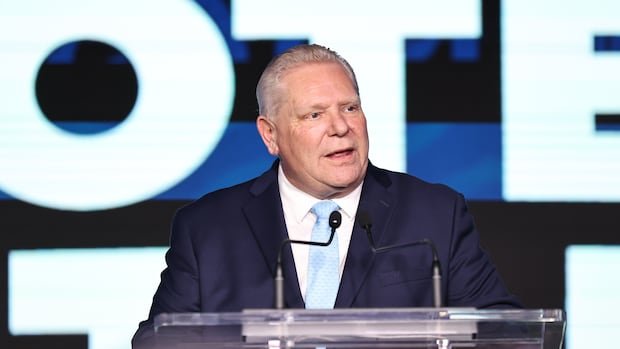

A year following his third consecutive majority government win with a promise to safeguard Ontario from U.S. tariffs, Doug Ford’s ongoing battle against Donald Trump remains a driving force in his policies and politics. Analysts monitoring the province’s struggling economy predict tougher times ahead for the Ford administration as crucial trade negotiations between the U.S. and Canada loom on the horizon.
Upon his re-election a year ago, Ford positioned himself as “Captain Canada,” actively challenging Trump and his tariff threats. Presently, Trump remains a central focus for Ford, frequently featuring in his public discussions.
Trump’s punitive tariffs have led to numerous job losses in Ontario’s trade-driven economy, particularly impacting the auto, steel, and aluminum sectors. The province saw a significant decline in employment, with nearly 40,000 jobs lost between the second and third quarters of 2025 directly due to the trade conflict.
In response to the economic challenges, the Ford government implemented various measures such as deferring approximately $9 billion in business taxes, offering $2 billion in Workplace Safety and Insurance Board premium rebates, and establishing a $70 million retraining fund for affected workers. These initiatives received praise from Ontario’s Chamber of Commerce CEO, Daniel Tisch.
To counter the economic downturn, the government has shifted its focus towards dismantling interprovincial trade barriers and expediting approvals for major mining and energy projects. Despite the economic setbacks caused by tariffs, Ontario’s former chief economist, Brian Lewis, commended the government’s response as reasonable and comparable to its actions during the initial COVID-19 lockdowns.
Ford’s confrontational stance towards Trump, including substantial taxpayer-funded advertising and public appearances in the U.S., has yielded mixed results according to experts. The Premier’s early distancing from Trump was deemed crucial by conservative strategist Mitch Heimpel, who highlighted the importance of dispelling comparisons between Ford and Trump.
While Ford’s tough rhetoric resonated with some voters, McMaster University’s political science professor Peter Graefe noted that certain pushbacks against Trump may have had adverse effects, potentially hindering negotiations with the U.S.
Looking ahead, Ford plans to actively engage in discussions with U.S. governors to advocate for continued free trade agreements. Industry experts emphasize the need for Ontario to diversify trade partnerships and maintain a balanced approach during the upcoming CUSMA talks.
In the midst of the ongoing tariff dispute, the government is urged to focus on domestic economic policies, including investments in infrastructure projects, skilled trades, and education. However, concerns remain about the long-term sustainability of Ontario’s economy amidst persistent challenges in cost of living, education, healthcare, and public services.