
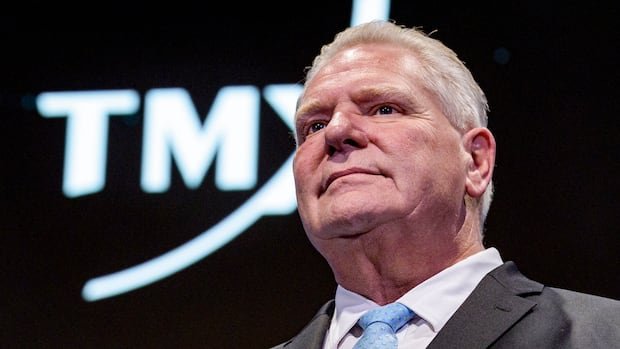

Ontario Premier Doug Ford has expressed strong concerns about the recent electric vehicle agreement between Canada and China, stating that Chinese manufacturers are making significant inroads into the Canadian auto market to the detriment of local workers. Ford criticized the deal, emphasizing that it could flood the market with low-cost Chinese electric vehicles without ensuring reciprocal investments in Canada’s economy, automotive sector, and supply chain. He warned that reducing tariffs on Chinese electric vehicles might hinder Canadian automakers’ access to the U.S. market, ultimately leading to economic repercussions and job losses.
The agreement, brokered by Canadian Prime Minister Mark Carney and Chinese President Xi Jinping, signifies a notable shift in bilateral relations. As part of the deal, China is expected to reduce tariffs on Canadian canola to 15 percent by March, while exempting Canadian canola meal, lobsters, crab, and peas from tariffs until at least the end of 2026. In return, Canada will permit 49,000 Chinese electric vehicles into the market at a tariff rate of 6.1 percent.
Although the agreement includes tariff relief on agricultural goods, there is no explicit commitment to investing in Canadian auto manufacturing. The government anticipates that the deal will attract new Chinese joint-venture investments in Canada within three years. According to provincial data, Ontario’s auto sector employs over 90,000 individuals, with more than 1.3 million vehicles produced in 2024.
Ford has urged Carney and the federal government to prioritize supporting Ontario’s auto sector to rectify what he perceives as a problematic situation. He called for the removal of the electric vehicle mandate, alignment of regulations with trading partners, and elimination of federal fees that allegedly inflate vehicle production costs and deter investments.
In response to the deal, Ford criticized the lack of consultation with auto manufacturers and expressed concerns about its potential impact on negotiations with U.S. President Donald Trump. Trump, however, viewed the agreement positively, emphasizing the importance of securing trade deals with China.
Peter Frise, a professor specializing in mechanical and automotive engineering, noted that the 49,000 vehicles in the deal represent a small fraction of the Canadian market and are unlikely to directly compete with domestic production. Meanwhile, union representatives and opposition parties have raised apprehensions about the implications of the agreement on the auto sector and the need to safeguard jobs in Ontario.
Ontario NDP Leader Marit Stiles and Liberal finance and trade critic Stephanie Bowman criticized Ford’s response to the deal, accusing him of inaction and evasion of responsibility. They highlighted the necessity of creating employment opportunities for Ontario workers through collaborations with Chinese electric vehicle companies.