
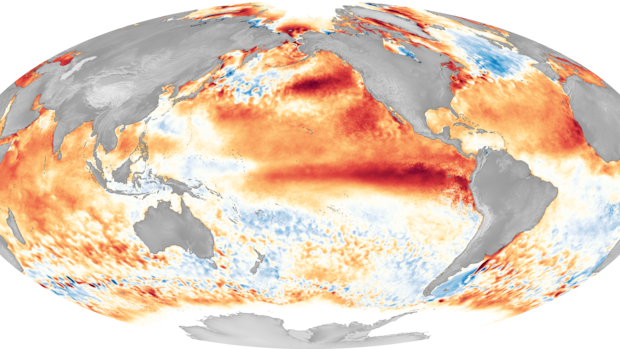

A potential significant El Niño event is being discussed that could lead to a warmer global temperature and worsen extreme weather conditions in the upcoming months. Various climate models are indicating a robust El Niño set to start in June or July, peaking around November, with temperatures in a crucial Pacific region possibly exceeding 2 degrees Celsius above average. Some models even suggest higher deviations.
El Niño is part of a broader climate system known as the El Niño-Southern Oscillation (ENSO), impacting weather patterns globally. When temperatures in the Pacific’s Niño 3.4 region rise above normal, El Niño occurs, while colder temperatures result in La Niña. The U.S. National Oceanic and Atmospheric Administration (NOAA) has issued an El Niño watch, with an 82% probability of development between May and July and a 96% likelihood of continuation from December to February. However, uncertainties persist regarding its peak strength.
Under usual circumstances, trade winds move warm water westward across the Pacific, but during El Niño, these winds weaken, causing a reversal in ocean currents. Despite the potential for a strong or ‘super’ El Niño, experts suggest minimal impacts on Canada this summer, emphasizing the global repercussions of a powerful El Niño.
While immediate effects may not be felt in Canada during summer, the winter season could bring significant changes. Historically, strong El Niño events have led to warmer winters in Canada, with the eastern and central regions experiencing notable impacts. The previous El Niño in 2023-2024 resulted in record warmth, with expectations of a more intense anomaly of around 2 degrees Celsius for the upcoming event.
Climate experts warn that the combination of ongoing global warming and the projected El Niño could result in unprecedented weather extremes. The continuous use of fossil fuels exacerbates the warming trend, potentially leading to record-breaking temperatures in 2026 or 2027. While El Niño can cause extreme conditions, the primary concern remains climate change, driven by human activities, and its long-term impacts on weather patterns and natural disasters globally.
Despite potential benefits like a calmer hurricane season for Atlantic Canada, the El Niño-related impacts on droughts, wildfires, and extreme weather events could pose significant challenges, particularly in regions already facing heightened risks. Experts stress the urgency of addressing climate change through sustainable practices and reducing reliance on fossil fuels to mitigate future environmental crises.