

Weeks following Ottawa’s announcement permitting a limited number of Chinese-manufactured vehicles into the Canadian automotive market, concerns have been raised about potential data privacy risks. However, this apprehension may not deter consumers seeking new vehicles.
During their visit to the Canadian International AutoShow, Dianne Dougall and Pat Shephard, who were exploring electric vehicles (EVs) to replace their Tesla, expressed keen interest in Chinese-made EVs. They emphasized that privacy concerns were no different from those associated with any other connected vehicle, citing the global storage of data and the need for general caution.
Debbie Perriccioli, from Waterdown, Ont., who was also present at the auto show and nearing the end of her vehicle lease, echoed a similar sentiment, stating that privacy considerations were no longer a significant factor in her vehicle purchasing decisions.
Recent survey data indicates that 61% of Canadians interviewed by Leger between Jan. 30 and Feb. 2 supported the introduction of Chinese EVs into the Canadian market. Concerns over vehicle quality and impacts on the domestic auto industry ranked higher (both at 38%) than worries about privacy and security (33%).
Experts interviewed by CBC News emphasized that data security remains a critical issue for all modern connected vehicles, irrespective of their country of origin. They highlighted that Canada’s current privacy laws may not provide sufficient protection against data access by the manufacturing nation, including China.
David Masson, Vice President and Field Chief Information Security Officer at Darktrace, emphasized that today’s vehicles are essentially “computers on wheels,” emphasizing the importance of data security regardless of the vehicle’s propulsion system or country of origin.
The article noted that China has enacted national security and intelligence laws requiring Chinese companies to cooperate with the government when requested. Similar legislation in the U.S., such as the Cloud Act, mandates American technology firms to share data collected abroad with the government upon request.
Pierre Poilievre and Doug Ford criticized the agreement with China, with Poilievre labeling the EVs as “roving surveillance systems” and Ford referring to them as “spy cars.”
Industry leaders, including Brian Kingston, CEO of the Canadian Vehicle Manufacturers’ Association, expressed reservations about allowing Chinese vehicles into the Canadian market. Kingston highlighted concerns about potential trade issues, security risks, and the impact on domestic auto manufacturers.
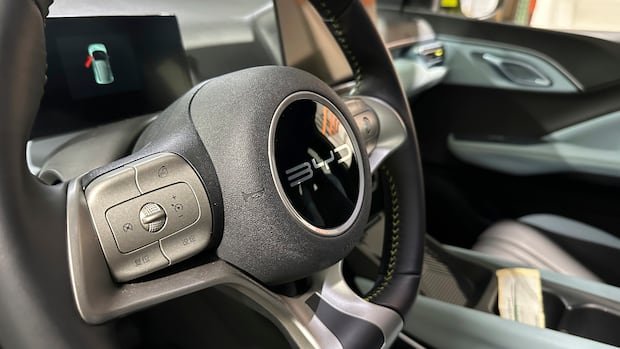
The article mentioned that BYD appears to be the only major Chinese automaker formally registered to import passenger cars into Canada. The company’s establishment of a bus assembly plant in Newmarket, Ont., in 2019 raised questions about the recent development.
Notably, the Canadian government has faced scrutiny over national security concerns related to other Chinese companies like ByteDance’s TikTok and telecom giant Huawei. The potential entry of Chinese-made vehicles into Canada has raised concerns about data security and its impact on the domestic auto sector.
Stephanie Carvin, a national security analyst and associate professor, dismissed claims that allowing Chinese vehicles into Canada represents a new data security breach. Carvin emphasized existing concerns about economic national security and the competitive advantages Chinese manufacturers may possess due to state support.
Overall, the debate around permitting Chinese-made vehicles in Canada underscores the complex intersection of data security, privacy, and economic considerations in the automotive industry.