
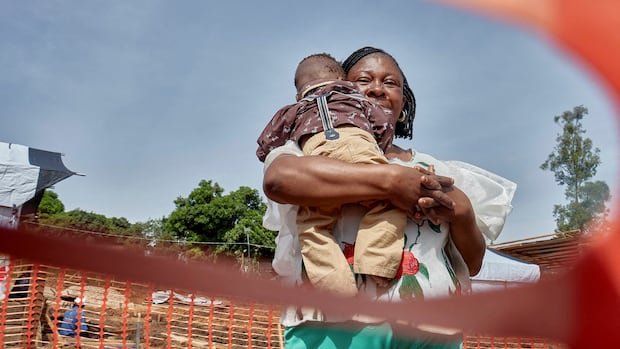

The Ebola outbreak in eastern Congo has now seen 1,003 confirmed cases and 254 deaths, with difficulties persisting in tracing individuals who have had contact with patients. Since its declaration on May 15, the outbreak in the Ituri province has seen 100 individuals recover, while 365 patients are currently receiving care in hospitals or isolation, according to Congo’s Ministry of Health.
Caused by the rare Bundibugyo virus, the Ebola outbreak is the most severe in its initial month, with no available vaccines or treatments. Authorities acknowledge the likelihood of additional unreported cases and anticipate that the outbreak has yet to reach its peak. Contact tracing remains a critical challenge, with local authorities having only achieved a coverage rate of 55%.
Dr. Jean Kaseya, director general of the Africa Centers for Disease Control and Prevention, emphasized the importance of identifying the index case to effectively control an Ebola outbreak, expressing uncertainty regarding the outbreak’s initial timeline. Efforts to identify patient zero and trace over 35,000 potentially exposed individuals have been hindered by ongoing violence from rebel groups in eastern Congo.
The outbreak’s rapid spread across three provinces in eastern Congo has raised concerns among African health experts that it could surpass the scale of the West African epidemic that claimed over 11,000 lives from 2014 to 2016. Displaced populations face heightened risks, with reports of unusual deaths at the Kigonze displacement camp in Bunia, prompting fears of a potential outbreak among the 20,000 residents. The UN refugee agency estimates that over two million displaced persons, including 320,000 refugees, are living in Ebola-risk areas in Congo.
The agency has expressed deep concerns over the escalating spread of the virus and its impact on vulnerable communities, emphasizing the catastrophic potential of an outbreak within already precarious living conditions. Children account for nearly 20% of confirmed cases, based on preliminary data from UNICEF.