
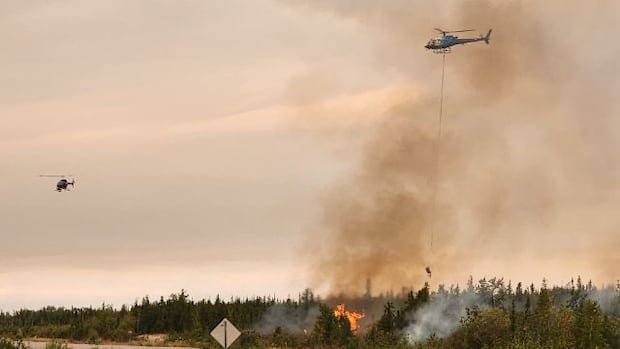

Data released by the N.W.T. government reveals a significant rise in evacuation orders over the past six years, matching the total number of evacuations seen in the previous three decades. The statistics were gathered by CBC News through a request to the N.W.T. Department of Municipal and Community Affairs (MACA) regarding evacuation occurrences in communities since the 1990s. The data indicated a total of 32 evacuation orders between 1990 and 2019, and an equal number between 2020 and 2026. These evacuations primarily resulted from wildfires, floods, and sporadic emergencies such as the 2019 apartment fire in Hay River.
The evacuation orders were not limited to specific communities but also included homes along highway stretches. Moreover, some evacuations were partial, requiring neighborhoods to relocate within the same town. Mike Flannigan, a wildland fire professor at Thompson Rivers University in Kamloops, B.C., expressed surprise at the significant increase in evacuations. He questioned whether the data captured all historical wildfire evacuations, which were previously not as diligently tracked. Additional data on wildfire evacuations from the federal government, starting from 1980 and lacking a decade-wise breakdown, was also requested by CBC News.
Flannigan highlighted the clear trend depicted in the N.W.T. government data, attributing the rise in evacuations mainly to wildfires. He emphasized that the territory has experienced more fire incidents due to human-caused climate change, resulting in longer warm seasons and increased lightning strikes, a common ignition source for wildfires in the region. Flannigan noted that modern fires exhibit more intense behavior, necessitating earlier evacuation calls as a precautionary measure to safeguard lives and property.
The data revealed that certain communities, notably Hay River and Kátł’odeeche First Nation, had to evacuate multiple times since 1990, totaling 12 evacuations between them. The escalating frequency of evacuations has prompted changes in emergency management practices. Kevin Brezinski, the former N.W.T. director of public safety, highlighted the heightened intensity and frequency of fires in recent years, posing greater challenges for emergency response efforts. The territory reported substantial recovery costs of $363.8 million from floods and fires since 2021, underscoring the financial impact of these disasters.
Brezinski emphasized the evolving priorities within emergency management, with a more focused approach on emergency measures in the current landscape. Reflecting on past fire incidents in the N.W.T., including the 1995 fire near Tulita, community members like Mayor Douglas Yallee and resident Shelley Melto shared personal experiences of evacuations and the lasting impact of these events. Melto, who was evacuated in 1995 and again in the early 2000s, echoed the sentiments of many residents who have faced evacuation orders, emphasizing the emotional toll and memories evoked by such events.