
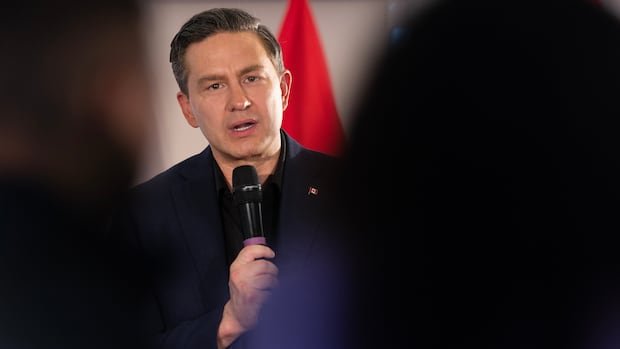

Conservative Leader Pierre Poilievre strongly criticizes a joint initiative by the federal and B.C. governments to purchase unoccupied condominiums in British Columbia with the aim of converting them into affordable housing. Poilievre deems this move a “bailout” that he believes should be immediately terminated.
Speaking to reporters in Vancouver, Poilievre questioned the need for such assistance and accused Prime Minister Mark Carney of providing bailouts exclusively to individuals affiliated with the Liberal elite. Carney, together with B.C. Premier David Eby, recently unveiled a plan to inject over $5 billion into British Columbia’s local infrastructure through the Build Communities Strong Fund over the next decade.
A key aspect of this partnership is the Canada-British Columbia Partnership on Condo Conversion, utilizing inventive financial tools to transform more than 2,200 unoccupied condo units into affordable residences swiftly. According to a statement from the Prime Minister’s Office, this strategy represents one of the quickest and most effective ways to augment housing supply, ensuring the prompt availability of affordable housing options for British Columbians.
Critics, including housing experts and provincial parties, have raised concerns about this initiative, echoing Poilievre’s sentiments that it essentially serves as a substantial lifeline for developers who have resisted adjusting prices to match a sluggish real estate market. Urban planner Andy Yan, who heads Simon Fraser University’s City Program, questioned the true intent behind the initiative, suggesting that it may be more about rescuing developers from poor business decisions rather than aiding the industry.
Poilievre contended that the real “innovative financial tool” lies in waiting for prices to align with market conditions, emphasizing that developers assumed the risk of constructing properties during a housing boom period that has since subsided. He criticized the notion of privatizing profits while socializing losses, emphasizing that there are repercussions for such actions and someone must bear the financial burden.
Recent data from the Canada Mortgage and Housing Corporation revealed a significant increase in unoccupied completed condos in Metro Vancouver, highlighting the prevailing housing market challenges. Carney emphasized the government’s intention to leverage appropriate financial mechanisms to repurpose these empty units into affordable housing, averting potential prolonged vacancy periods.
While Poilievre called for the cancellation of the perceived bailout, he also advocated for streamlining regulations and reducing taxes on home construction to expedite the development process. The federal-B.C. agreement includes provisions for funds to be allocated over the next decade to reduce developers’ fees paid to municipalities significantly.
By slashing development charges for multi-unit housing by up to half, builders could realize savings of up to $40,000 per unit, with governments earmarking resources for critical infrastructure enhancements such as water and wastewater systems, as well as local roads. Eby underscored the importance of recognizing the existing housing stock available for occupancy, acknowledging the affordability challenges faced by prospective homeowners.
In conclusion, the debate surrounding the government’s intervention in the housing market continues, with contrasting views on the efficacy and implications of such initiatives.