
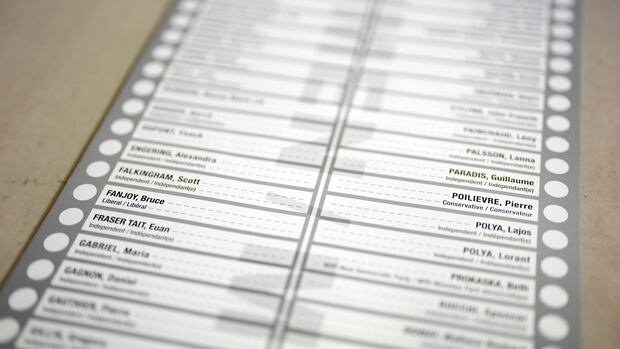

A parliamentary committee is urging the government to amend federal election regulations to prevent electoral reform proponents from organizing extensive ballot protests. Over the last five years, a group of reform advocates known as the Longest Ballot Committee has spurred numerous candidates to participate in multiple electoral races. This has led to significant ballot modifications by Elections Canada, including the production of ballots almost a meter long, causing confusion among voters and delaying the counting process.
The procedures and House affairs committee recently issued a report recommending changes to the rules governing candidate eligibility. Presently, a candidate must obtain 100 voter signatures in their riding to enter an election or byelection. The Longest Ballot Committee has previously had voters sign multiple nomination sheets.
The committee members propose making it a violation of the Canada Elections Act to sign more than one nomination form and clearly stating on the forms that each voter can only endorse one candidate. Additionally, they suggest making it illegal to influence a voter to sign multiple nomination forms, with potential penalties for such actions left unspecified in the report.
As the Longest Ballot Committee gears up for an upcoming byelection in Terrebonne, where 48 candidates are confirmed to be running, the committee recommends that each person should only serve as an official agent for one candidate per riding. Previously, one of the group’s leaders acted as the official agent for most candidates, but candidates in the upcoming Terrebonne election have primarily recruited their own agents.
Advocates of the Longest Ballot Committee are calling for a citizens’ assembly to oversee electoral reform, criticizing political parties for being hesitant to make the government more representative. They emphasize their commitment to using individual official agents for each candidate in Terrebonne and express readiness to face the new challenge posed by the changes to signature requirements.
The Longest Ballot Committee had previously coordinated up to 200 candidates in a single byelection, prompting Elections Canada to use write-in ballots instead of printing lengthy candidate lists. Similarly, write-in ballots will be utilized in the upcoming Terrebonne election.
In contrast, the Bloc Québécois issued a dissenting report opposing the recommendation to mandate unique signatures for nomination forms, arguing that it could impede voters’ freedom to change their support during the campaign and potentially compromise the secrecy of the ballot. They also raised concerns about the burden this requirement would place on election workers tasked with verifying signatures on nomination papers.