
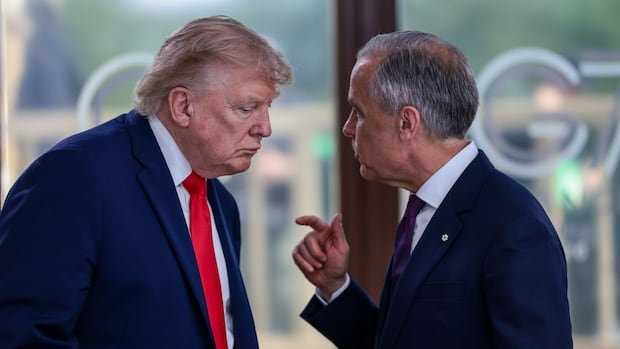

Canada is in ongoing discussions with the United States to secure a trade agreement that would shield it from the imminent tariff threat by U.S. President Donald Trump and potentially provide relief on current tariffs affecting vital sectors. Despite numerous meetings between top Canadian and American negotiators over the past three weeks, the two nations are deadlocked as they approach the final stages of negotiations.
Sources reveal that Canadian negotiators are concerned that they may not be able to prevent Trump’s proposed 50% tariffs on a wide range of Canadian goods. Washington is standing firm on its demands, while Ottawa is attempting to convince provinces to lift restrictions on American alcohol in exchange for tariff relief.
In the automobile sector, the U.S. is suggesting a reduction in its current 25% auto tariffs to 15%, with the possibility of further decreasing the tariff on Canadian-made vehicles to 7.5% by increasing U.S. content. However, Canada finds this offer insufficient. The U.S. justifies its tariffs by citing alleged discrimination by Canada against its automobile, dairy, and alcohol industries.
Regarding dairy, Trump has criticized Canada’s supply management system, particularly the tariffs on U.S. dairy products. Negotiators foresee that Canada may need to make concessions in this area, although it could pose political challenges for the Canadian government due to the importance of the dairy industry, particularly in Quebec.
In the alcohol sector, provinces have been advised by the federal government to prepare for the reintroduction of U.S. alcohol if a trade deal is reached. However, the reluctance of some provinces to lift bans on U.S. alcohol sales remains a significant obstacle in averting the tariff threat.
Canada is pushing for a reduction in existing U.S. tariffs on steel, aluminum, and copper, along with seeking relief from the 45% tariff on Canadian softwood lumber. The U.S. administration is reluctant to discuss the softwood lumber issue alongside other sectoral tariffs.
Furthermore, the U.S. is seeking preferential access to Canadian critical minerals and addressing energy and security concerns in the trade deal. Canada possesses critical minerals desired by the U.S., and President Trump recently announced a significant investment in critical minerals projects to enhance domestic production and national security.
Negotiations are intensifying as the deadline approaches, with both sides grappling with complex trade issues across multiple sectors. The outcome of these negotiations will have far-reaching implications for the economic relationship between Canada and the United States.