
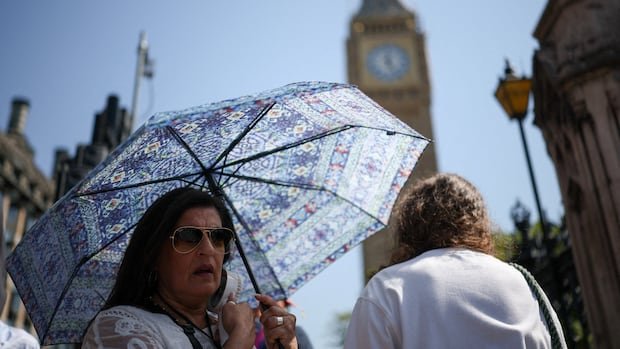

Britain experienced its highest temperature of the year on Thursday, with west London recording 38.1 C, according to the national weather service. This marked a new peak for 2026, surpassing the previous high of 38 C in June. Despite this, it fell short of the U.K.’s August record of 38.5 C set in 2003.
Both Britain and France are currently in the midst of their fifth heat wave of the year, which began in May. This latest heatwave has seen 2026 break records with four days exceeding 36 C and two days reaching 38 C. Meanwhile, France has seen temperatures climb even higher, nearing 41 C in various regions from Aquitaine to the Rhone River valley.
The intense heat is expected to shift eastward away from Britain and France by Friday, gradually easing over the weekend. The ongoing heatwaves have highlighted the lack of preparedness in both countries for such extreme temperatures, with limited air conditioning outside of commercial spaces.
In Britain, healthcare workers have faced challenges due to the heat, with reports of nurses collapsing from heat exhaustion in hospitals lacking adequate cooling systems. The dry conditions have also led to widespread droughts, impacting crops, rivers, and water resources.
Southern Water in England has requested a rare drought order to restrict non-essential water usage due to the unusually dry weather in Hampshire and the Isle of Wight. Authorities in both countries remain vigilant for wildfires, with firefighters battling blazes and concerns rising over the increased risk of further fires.
British Prime Minister Andy Burnham is considering a ban on disposable barbecues to reduce the risk of wildfires. The extreme weather conditions have also prompted French firefighters to demand more resources to handle the escalating number of incidents, including recent fires in northern regions like Pas-de-Calais and Brittany.