
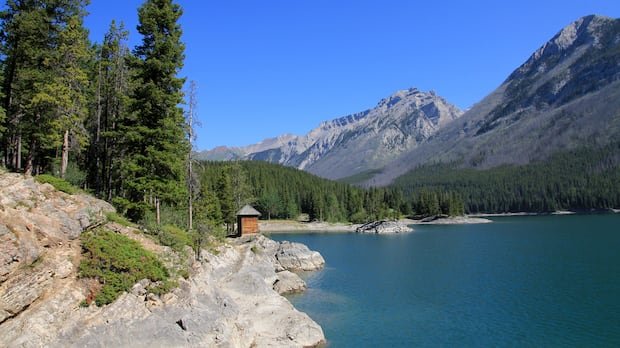

Parks Canada will enforce restrictions on various lakes and rivers in Banff National Park to prevent the spread of aquatic invasive species starting this spring. Activities such as canoeing, paddleboarding, kayaking, and fishing with waders will no longer be permitted at lakes like Moraine Lake, Bow Lake, and Lake Minnewanka. Additional regulations will apply to backcountry lakes and rivers.
While boats that pass inspection and rental boats will still be allowed on Lake Minnewanka, other watercraft will be banned. Visitors can still swim, snorkel, and fish without waders at these locations. These restrictions are expected to be in effect indefinitely.
The previous practice of following the “clean, drain, dry” policy to use these lakes will no longer be sufficient. The introduction of whirling disease in Lake Louise in 2025 has prompted these stricter measures. Parks Canada officials believe that the disease was likely introduced through contaminated watercraft or angling equipment rather than natural fish movement.
Marie Veillard, the Parks Canada aquatic invasive species project coordinator, revealed that despite efforts, about 60% of visitors adhering to regulations have not been adequate to halt the spread of whirling disease. This disease, which affects fish populations like trout, whitefish, and salmon, can be devastating, causing significant mortality among young fish.
Mike Holroyd, the executive director of the Alberta Whitewater Association, expressed frustration on behalf of paddlers regarding the sudden implementation of the new restrictions. He emphasized the importance of education, cleaning stations, and enforcement to prevent the spread of invasive species.
While some lakes and rivers will be closed to certain activities, popular destinations such as Lake Louise, Johnson Lake, and Two Jack Lake will remain open for water recreation. The decision to close specific areas was made based on ecological sensitivity, with Lakes Minnewanka, Moraine, and Bow containing delicate fish populations.
Parks Canada stresses the difficulty of removing established aquatic invasive species, highlighting prevention as the most effective strategy. The success of similar restrictions in Yoho and Kootenay national parks since 2023 is encouraging, with no new cases of whirling disease reported in Yoho.
Monitoring of fish populations, recreational activities, and disease spread will continue in lakes affected by the new regulations. Visitors are reminded to thoroughly clean, drain, and dry their equipment before entering permitted water bodies.