
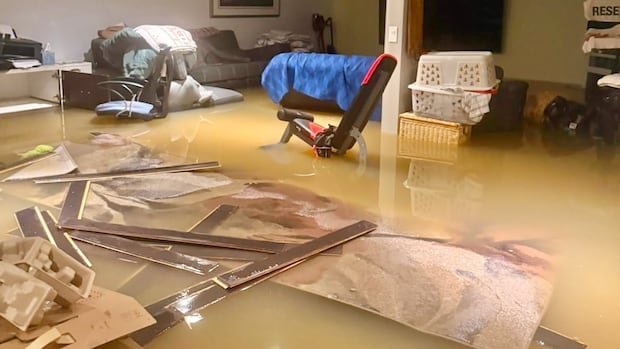

Back-to-back storms in July and August caused significant damage in north Niagara, leading to an estimated $360 million in losses in the region and other parts of Ontario, as per a recent report. Catastrophe Indices and Quantification Inc. (CatIQ) provided the initial estimates, urging a shift towards flood prevention solutions instead of recovery policies, according to the Insurance Bureau of Canada (IBC).
Amanda Dean, the IBC’s vice-president for Ontario and Atlantic Canada, stated that catastrophic flooding events are no longer surprising but are increasing in frequency and severity. CatIQ, based in Toronto, estimated that the insured damage from the consecutive storms on July 27-28 and August 2 amounted to at least $360 million.
The storms brought intense rainfall and flash flooding to areas like St. Catharines, Lincoln, Niagara-on-the-Lake, and Grimsby, with reports of heavy rainfall reaching as far as North Bay. Despite not being mentioned in the IBC news release, Niagara Falls also experienced sewage flooding.
CatIQ, contacted through a communications firm by CBC News, explained its data collection process from primary insurers to calculate industry loss estimates. While detailed data specific to Niagara is not currently available, the company noted that estimates are only broken down by province, not by region.
Anne Marie Thomas from the IBC, who engaged with residents in St. Catharines post-storms, shared heartbreaking stories of financial hardships faced by affected individuals. The City of St. Catharines and the Town of Lincoln declared a state of emergency following the storms to address the significant rainfall that overwhelmed the stormwater sewer system, resulting in sewage flooding in many homes.
The IBC emphasized the need for investing in water infrastructure capable of handling severe storms, highlighting the drastic increase in water-related damage over the past two decades. With an estimated $60 billion required for infrastructure improvements, the involvement of senior government levels is crucial for effective flood prevention measures.
Shifting the focus from recovery to prevention, the IBC proposed measures such as home retrofits, backwater valves, sump pumps, stronger building codes, and improved land-use planning to mitigate flood risks. St. Catharines introduced a flood alleviation program post-storms, receiving an influx of applications and allocating funds for flood protection devices to support affected homeowners. Mayor Mat Siscoe directed efforts towards investigating the flooding causes and developing strategies for better flood protection.
Thomas stressed the importance of understanding insurance coverage and seeking adequate protection, noting the limitations of relying solely on insurance companies for flood-related losses. Residents were advised to review their coverage and seek comprehensive policies to safeguard against future flooding incidents.