
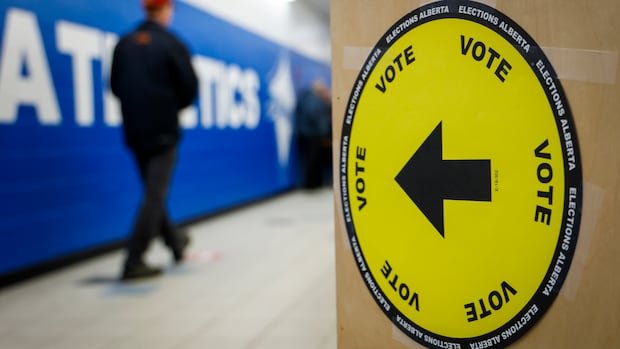

Albertans are gearing up for the upcoming Oct. 19 referendum where they will be presented with 10 questions by the provincial government. Half of the ballot questions pertain to immigration matters. Previously, we delved into the initial immigration query, discussing whether Alberta should have more authority over immigration from the federal government. Additionally, we examined questions two to four, which propose various policy approaches to limit temporary residents’ access to public and social services.
Now, the focus shifts to question five, which inquires whether individuals should be mandated to show proof of citizenship, such as a passport, birth certificate, or citizenship card, in order to vote in an Alberta provincial election. According to the province, if this question is approved, clearer voting regulations will be established requiring voters to demonstrate citizenship to participate in provincial elections. Alberta intends to incorporate a citizenship indicator on driver’s licenses and ID cards, which will serve as acceptable proof of citizenship for voting purposes.
While this question rounds out the immigration-related queries in the referendum, the Alberta chapter of the Canadian Bar Association clarifies that it is primarily about verifying citizenship for voting rather than immigration status. The association emphasizes the significance of how Alberta authenticates citizenship for voting and whether the proof requirements pose a burden on eligible citizens.
Moreover, the question may imply concerns about voter fraud or the potential risk of it occurring, as indicated by Andrea Lawlor, an associate professor specializing in election law at McMaster University. Lawlor suggests that the question may be influenced by rhetoric from the United States, where allegations of voter fraud are more common, despite limited evidence of such occurrences in Canada.
In terms of voter eligibility, only Canadian citizens aged 18 and above can participate in federal and Alberta provincial elections, with residency in Alberta being a requirement for provincial electors. It is illegal for non-citizens to vote in Canadian elections. Voters can present government-issued photo ID or multiple forms of ID without a photo, along with the option of having another elector vouch for them.
Regarding voter fraud statistics, Elections Alberta highlights the rarity of such incidents, citing only a few cases related to voter ineligibility across provincial election events. Similarly, at the federal level, Elections Canada has imposed fines on individuals who voted as non-citizens in federal elections. Despite public perceptions, actual instances of voter fraud in Canada remain minimal.
If approved, the referendum question on voter ID requirements would enhance voting regulations by necessitating proof of citizenship for electors. Alberta’s proposal to tighten voting rules by mandating proof of citizenship could potentially disenfranchise certain groups, including individuals with limited access to required documentation and new Canadians navigating the immigration process.
Notably, the implementation of such a law would likely face legal challenges, given the protection of the right to vote under the Charter of Rights and Freedoms. The necessity for a compelling rationale to restrict voter enfranchisement would be crucial in justifying the constitutionality of the proposed law.