

Welcome to our weekly newsletter focusing on environmental developments and strategies driving us towards a more sustainable future. In recent discussions regarding Prime Minister Mark Carney’s new nature strategy, the integration of artificial intelligence (AI) has emerged as a significant aspect. Let’s delve into how the conservation sector, like various other industries, is leveraging AI technologies.
This week’s highlights include the potential of AI in conservation efforts, the impactful role of wind energy, and an innovative initiative by Parks Canada collaborating with social media influencers to influence visitor behavior in Banff.
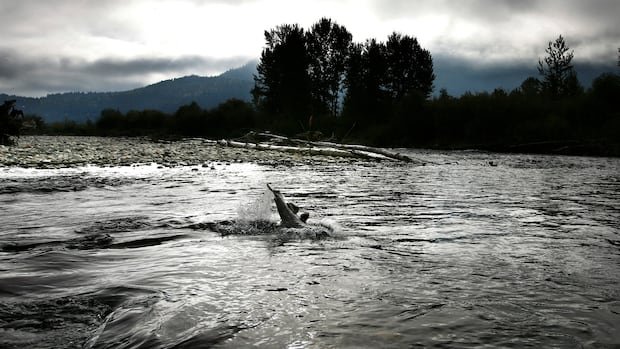
Exploring the potential of AI in conservation work, AI models have revolutionized the monitoring of salmon migration and population trends through camera surveillance, significantly reducing the labor-intensive process of manually analyzing extensive footage.
Alemu Gonsamo, based at McMaster University, is undertaking the ambitious task of mapping and evaluating Canada’s vast landscapes. Utilizing satellite and aerial imagery, Gonsamo collects critical data on factors such as tree density and soil carbon content in remote areas. The sheer volume of data collected poses a challenge in terms of analysis and interpretation.
The announcement by Prime Minister Mark Carney to incorporate AI into Canada’s new nature strategy for expanding protected areas and rehabilitating ecosystems has been met with enthusiasm by Gonsamo. With Canada’s expansive territories and limited manpower, technology plays a crucial role in data collection and analysis.
Collaborating with organizations like World Wildlife Fund Canada and Indigenous communities, Gonsamo has conducted studies on carbon storage in Canadian soils, particularly focusing on the carbon-rich peatlands of Northern Ontario. Leveraging data from satellite sensors and employing machine learning techniques, Gonsamo’s team has efficiently processed vast datasets to derive valuable insights.
Through the strategic utilization of approximately 500 on-site measurements of peat depth in the Hudson Bay Lowlands, Gonsamo’s team successfully extrapolated peat depth values for the entire region, showcasing the power of AI and advanced technologies in conservation research and ecosystem management.