
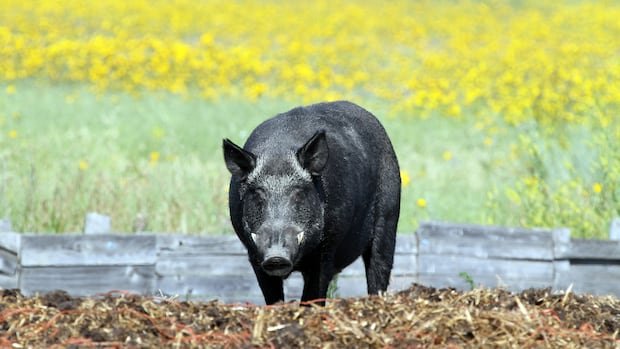

Thermal drones integrated with emerging artificial intelligence systems are demonstrating potential in bolstering Alberta’s defenses against invasive and harmful wild boar.
Hannah McKenzie, the Alberta government’s wild boar specialist involved in leading the Wild Boar at Large Detection Project, stated that drones are one of the tools being utilized to address the issue.
A recent report highlights a collaboration between Alberta Agriculture and the University of Calgary to evaluate a novel form of aerial surveillance for tracking wild boar, which pose a growing threat to agriculture and ecology in the Prairies.
According to the report released on the Alberta government website in late March, automated drones equipped with infrared cameras provide an innovative and non-intrusive alternative to conventional detection methods.
In the spring of 2024, researchers deployed thermal drones equipped with sensors capable of detecting heat radiation emitted by wild boars. Thermal imaging is most effective at night when the heat signatures of the boars stand out against their cooler surroundings.
Subsequently, artificial intelligence programs were trained to analyze the footage and accurately identify wild boars while recording the number of sightings. McKenzie emphasized the efficiency and effectiveness of using drones for monitoring a species that is challenging to track.
Traditional tracking methods such as ground tracking, helicopter surveys, and trail cameras often prove ineffective due to the nocturnal, intelligent nature of wild boars. A University of Saskatchewan professor, Ryan Brook, highlighted the invaluable aerial perspective provided by drones in locating the elusive animals.
Thermal drones have demonstrated success in combating wild boar infestations in other regions. These animals, which usually travel in groups known as sounders, are a combination of Eurasian wild boars and domestic pigs, exhibiting destructive behavior and prolific breeding habits.
The feral pig population in Alberta, including hybrids and escaped farm animals, poses a significant threat to the ecosystem and agriculture. The potential introduction of diseases such as African swine fever could have devastating consequences for the pork industry in Alberta.
The ongoing efforts to eradicate wild boars in Alberta focus on monitoring, trapping, imposing new regulations on wild boar farms, and prohibiting wild boar sport hunting. The thermal drone project represents a proactive step towards addressing the issue.
The project aimed to train AI programs to detect wild boars effectively, establish a standardized sighting database, and utilize AI to create a digital habitat map predicting the likely locations of feral herds in Alberta.
Two Alberta boar operations served as testing grounds for the project, with drones covering over 3,000 kilometers during the spring of 2024. The AI models were trained and validated using thermal images from one farm and tested in a more natural setting at the second farm.
Despite promising results, challenges such as detecting small piglets and differentiating wild pigs from other wildlife persist. Future research will focus on refining the AI programs to enhance species differentiation and landscape identification.
The project also developed a habitat suitability map to forecast areas where wild boars are most likely to reside in Alberta, aiding in targeted mitigation efforts. This initiative signifies a collaborative, long-term approach to monitoring and combating the invasive species.
While progress has been made, complete eradication of wild boars is a long-term endeavor that necessitates a national, science-driven strategy to effectively address the cross-boundary challenge presented by these resilient animals.