
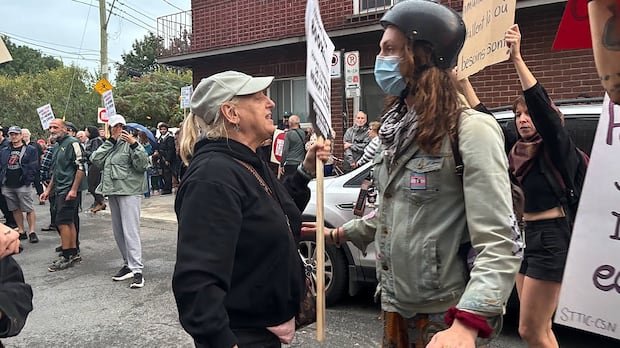

Shirley Kushner, a resident near Montreal’s Atwater Market for 13 years, has noticed an increase in theft and vandalism in the area. She expressed concern over the rising incidents, stating that the situation is alarming. The community is divided on the presence of a supervised consumption site (SCS) that residents like Kushner are advocating to close due to its proximity to a school.
Tensions escalated on Tuesday evening as demonstrators and counter-protesters clashed over the Maison Benoît Labre facility. The facility, which has been operating since spring 2024, offers subsidized housing and a supervised drug consumption site. The SCS, operating beyond capacity, turns away a significant number of users, leading to visible drug use, discarded paraphernalia, and disruptive behavior in the vicinity.
Over 2,400 residents signed a petition demanding increased security measures and the closure of the SCS. In response, Quebec passed Bill 103, mandating supervised consumption sites to relocate at least 150 meters away from schools. Maison Benoît Labre faces the challenge of relocating its consumption site within four years, an endeavor estimated to cost $6.6 million.
Among those advocating for the closure of the site is a group called UPTFM, which organized the recent protest. The group emphasizes fair property taxes and accountability from the municipal government. Residents and business owners near the site, like Herman Alves, highlight a surge in burglaries and theft incidents, affecting both businesses and tenants in the area.
Montreal police data shows a notable increase in crime around Maison Benoît Labre following the opening of its SCS and day center on Notre-Dame Street West. Despite the relocation of the supervised consumption services, other essential services at Maison Benoît Labre will continue, as stated by the organization’s executive director, Andréane Désilets.
Supervised consumption sites play a crucial role in preventing fatal overdoses and disease transmission by offering sterile equipment, immediate medical assistance, harm-reduction education, and access to health services. Alexandre Berthelot, a member of a local homeless advocacy group, argues that closing such facilities would exacerbate existing issues instead of resolving them.
Montreal Mayor Soraya Martinez Ferrada urges citizens to display tolerance and compassion, emphasizing the city’s efforts to enhance social cohesion. While acknowledging the concerns for safety, she hopes to find a collaborative solution with the Quebec government. Montreal public health is assisting Maison Benoît Labre in formulating relocation plans, aiming to address community relations and support vulnerable individuals effectively.