
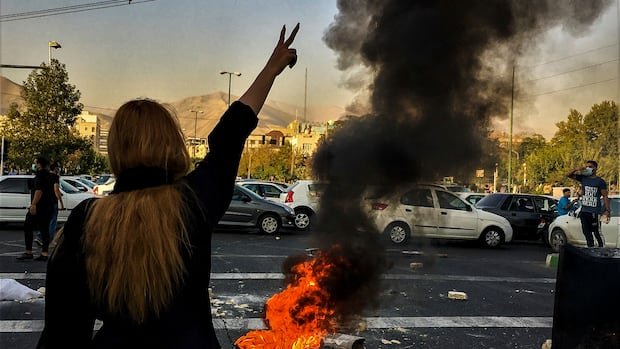

Four years following the passing of a young woman known for her advocacy for women’s rights and freedom in Iran, Amnesty International has revealed that the subsequent government crackdown was a systematic effort with the perpetrators still not being held accountable.
Mahsa Amini, aged 22, tragically died on September 16, 2022, subsequent to her arrest by Iran’s morality police for wearing attire deemed inappropriate. The recent report by Amnesty, built on 270 interviews, over 2,000 videos, and extensive documentary evidence, exposes the ongoing leadership of violent crackdowns by the same officials. It points out numerous officials allegedly involved in what is labeled as crimes against humanity.
The authors of the report are urging international intervention to prevent the repetition of the cycle of deadly crackdowns that have persisted for years. Raha Bahreini, Amnesty International’s Iran researcher in London, emphasized the critical need to halt the normalization of mass protest killings in Iran.
The protests earlier this year, initially triggered by economic grievances, escalated into demands for political change met with harsh suppression by security forces. Amnesty highlighted the evidence of crimes against humanity, including murder, torture, enforced disappearance, and persecution targeting various groups. The report also sheds light on the disproportionate targeting of Kurdish and Baluchi communities by Iranian authorities, resulting in a significant number of deaths.
As tensions persist in the region due to conflicts involving the U.S. and Israel, Amnesty cautioned against leveraging Iran’s human rights violations to justify military actions. The report also calls for criminal investigations into 87 officials allegedly involved in the crackdowns, including high-ranking figures in Iran’s security apparatus.
Despite the challenges faced since Amini’s death, civil disobedience in Iran has continued to grow bolder, reflecting the enduring spirit of resistance against oppressive laws. The Woman, Life, Freedom movement has made strides in challenging discriminatory regulations, prompting authorities to tread cautiously to prevent further uprisings.