

The upcoming U.S. midterm elections will determine the extent of Republican President Donald Trump’s ability to advance his agenda in the final two years of his term or if he will encounter resistance from a Congress now under Democratic control.
Here’s a breakdown of the significance of the midterms.
The midterms are critical as they will decide the balance of power in both the House of Representatives and the Senate, collectively forming the U.S. Congress. The party in control of the Senate influences presidential appointments to key positions in the cabinet, judiciary, and federal agencies. On the other hand, the party controlling the House can trigger impeachment proceedings and initiate budget bills. If one party controls both chambers, it wields significant influence over legislation and can potentially impede certain presidential actions.
In terms of the current election landscape, there is a sense of optimism among Democrats and some concern among Republicans. Historical trends show that incumbent presidents’ parties have typically lost seats in Congress during midterm elections, with only rare exceptions like Bill Clinton and George W. Bush, who had high approval ratings during their midterms. However, President Trump’s approval ratings are not as favorable.
With narrow majorities in both chambers, the Republicans have limited margin for losing seats while retaining control of Congress. The Democrats only need to flip a few seats to gain control of the House and Senate, although winning Senate seats is more challenging due to the fewer number of seats up for election and the statewide victories required.
All 435 seats in the House of Representatives are up for grabs, as members serve two-year terms, while only 35 of the 100 Senate seats are being contested this fall, as senators serve six-year terms.
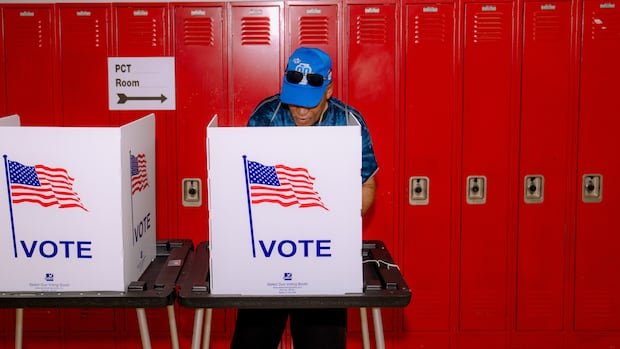
The voting day for the midterms is on Nov. 3, marking the halfway point of a president’s term. However, many voters may opt for early voting through advance polls or mail-in ballots, despite ongoing efforts by the Trump administration to limit mail-in voting.
While President Trump is not on the ballot, his influence on the elections is substantial. His approval ratings are a key factor, as historically, presidents with low ratings during midterms have seen significant losses for their party. Trump plans to campaign in states with tight races to support Republican candidates, although some candidates are reportedly hesitant about his involvement.
Key issues in the midterms include concerns about the cost of living, influenced by factors like gas prices due to geopolitical tensions and consumer goods prices affected by tariffs. Trump’s policies and actions are also central to voter sentiment, especially among swing voters who previously supported him but have shifted away.
Turnout in midterms is typically lower than in presidential elections, prompting parties to focus on motivating their base. For Democrats, reducing Trump’s influence is a priority, while Republicans are emphasizing fears of a Democratic-controlled Congress impacting the economy.
In the Senate races, fewer than 10 seats are considered at risk of changing hands, with Republicans facing challenges in states like North Carolina, Maine, Ohio, Alaska, Iowa, and Texas. Democrats are focused on defending seats in Michigan and New Hampshire.
Regarding the House races, most seats are deemed safe for either party, leaving only a few competitive districts where the outcome is uncertain. Campaign analysts are closely watching key districts, particularly 17 Republican-held seats labeled as toss-ups, including some in Pennsylvania and Michigan, which are crucial targets for Democrats aiming to regain control of the House.