
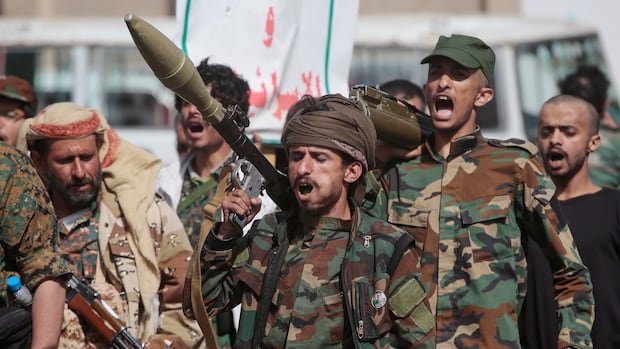

In the wake of their previous assaults on commercial ships near Yemen, the Houthis have extended their aggressive influence in the Middle East over the past three years. This group has posed challenges for Israel, Saudi Arabia, the U.S., and international maritime routes, potentially impacting global oil prices.
The Houthis, engaged in the Yemeni civil war against the internationally recognized government supported by a Saudi-led coalition, emerged in the 1990s as a religious revival movement under the Houthi family in northern Yemen. Following the uprising in 2014, the Houthis seized control of Sanaa, prompting Saudi-led airstrikes with U.S. backing against them starting in early 2015. The conflict resulted in significant casualties and humanitarian crises, with the UN labeling it one of the world’s most severe.
After a UN-brokered ceasefire in April 2022, violence decreased, but the Houthis shifted focus to Israel and Red Sea shipping following Hamas’s actions in Gaza. These attacks targeted vessels in the Red Sea, resulting in casualties and disruptions. Recent escalations indicate a potential breakdown of the truce, raising concerns about a return to civil war in Yemen and implications for global commodity prices.
The Houthis’ strategic actions, including attacks on Saudi Arabia and control over the Bab al-Mandab Strait, have wide-reaching implications for global shipping and energy flows. The group’s aspirations for regional influence, distinct from but sometimes aligned with Iran’s interests, could further destabilize the region and impact international trade routes.
Recent incidents have led to record-high oil tanker shipping costs and increased global oil prices, reflecting the disruption caused by the conflict. The significance of the Red Sea and Suez Canal routes for global trade underscores the broader economic repercussions of the ongoing tensions in the region.
Efforts to address the situation involve diplomatic engagements between key stakeholders like Saudi Arabia and the U.S., with discussions on potential interventions. The evolving dynamics in the region, including Iran’s strategic interests and the Houthis’ actions, suggest a complex future scenario that could further impact global trade and energy markets.