
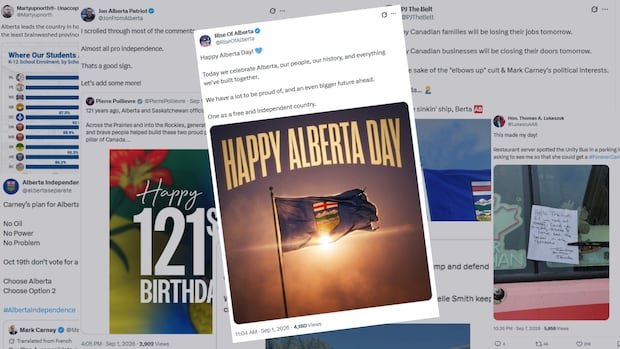

On the morning of September 1st, which is Alberta Day, a prominent separatist social media account in the province, known as Rise of Alberta, with nearly 100,000 followers, celebrated the day with content advocating for Alberta’s independence. The account posted a striking image of the Alberta flag, followed by a video of Premier Danielle Smith discussing the referendum, footage of a drone show honoring Alberta Day, and a link to purchase an Alberta flag blanket. This account has been identified as the most influential player in the online discourse around Alberta independence, according to a recent analysis by the Centre for Media, Technology and Democracy’s Media Ecosystem Observatory.
The study revealed that the online conversation regarding Alberta independence is primarily driven by a passionate network of influencers, memes, and online communities dedicated to the cause. Despite strong online support for independence, real-world polling indicates that only about a quarter of the population in Alberta supports secession. Researchers focused on social media platforms like Instagram, Twitter, YouTube, TikTok, and Bluesky to analyze the discussions related to Alberta’s potential separation from Canada.
The report identified 114 political influencers who generated half of the total social media engagement on the topic since the beginning of 2025. Among the top influencers were accounts advocating for Alberta’s independence, such as Rise Of Alberta, Keith Wilson, and Jeffrey Rath. The report also highlighted the significant engagement garnered by pro-independence accounts compared to federalist accounts like Thomas Lukaszuk and Jason Kenney.
The rise of separatist sentiments online has been attributed to the emotional appeal and fear associated with Alberta’s relationship with the federal government. Social media influencers have emerged as key sources of political information in Canada, with the conversational tone of separatist content resonating with some users more than traditional government messaging. The report also noted that the separatist movement has capitalized on existing networks formed during events like the COVID-19 pandemic and other activism movements to bolster their online presence.
While the impact of online content on public opinion remains unclear, experts suggest that the dominance of separatist narratives online could influence voter turnout and mobilization efforts. The prevalence of pro-separatist content online may create a false sense of momentum among supporters, potentially increasing their likelihood to participate in political activities.