
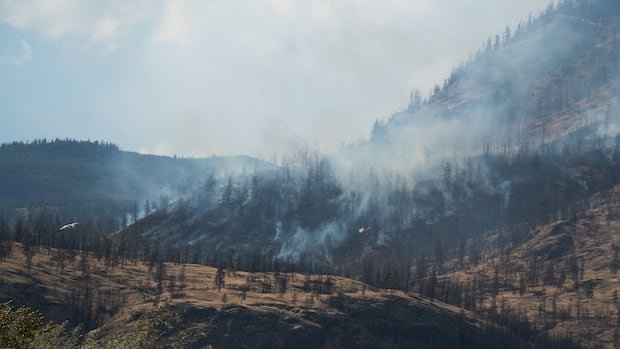

Amidst the aftermath of a severe wildfire season in British Columbia, there are discussions on the potential for utilizing more burned timber for lumber products. Ward Stamer, a forestry critic and B.C. Conservative MLA representing Kamloops-North Thompson, has raised concerns about the current low rate of salvaging wildfire-damaged timber in the province. He advocates for increasing the salvage rate to 25 percent and improving access to the fire-affected timber.
The Ministry of Forests has expressed reservations about the feasibility of raising the salvage rate to 25 percent, citing challenges related to access, available volume of merchantable timber, and crew safety. Stamer emphasizes the importance of swift action, highlighting the risk of rapid depreciation of burned timber. He specifically mentions the Adams Lake wildfire of 2023 and the significant volume of trees awaiting harvesting.
In terms of the value of burned timber, John Drew, president of Woodco Industries in Barriere, B.C., explains that depending on the species and condition, fire-affected wood can typically be used for lumber for up to two years before transitioning to pulp use. Research indicates that as fire-affected wood dries, it may experience shrinkage, checking, and splitting, while also becoming more vulnerable to insect and fungal attacks.
Woodco Industries is capable of utilizing salvaged timber in a similar manner to green timber for various lumber products, according to Drew. He suggests that increasing the amount of salvaged burned timber could allow mills to reduce their reliance on green timber sources. Despite the potential benefits, the processing of burned wood requires meticulous care due to challenges such as debarking difficulties and issues with scanning blackened wood.
Looking ahead, the province has made strides in addressing obstacles related to handling and processing burned logs, equipment maintenance, dust mitigation, and integrating burned fiber into pulp production. The utilization of wildfire chips by pulp mills has been steadily increasing, with approximately seven percent of all processed wood coming from wildfire sources in recent years.
While there is a case for redirecting some logging efforts towards salvaging burned forests, caution is advised against setting blanket salvage targets. Salvaging burned forests can aid in maintaining future timber supply and ecological functions, but the ecological impact and risks associated with further harvesting in heavily disturbed areas must be carefully considered.
Efforts to expedite the salvage process for burned timber have been acknowledged by the Ministry of Forests, with new salvage cutting permits typically issued within 25 days of application receipt. The ministry ensures that harvesting commences once wildfires are contained, and access is approved by the B.C. Wildfire Service to mitigate further risks. Collaboration with First Nations through agreements for wildfire salvage operations is also a key initiative to enhance the salvage process and foster partnerships within the forestry sector in British Columbia.