
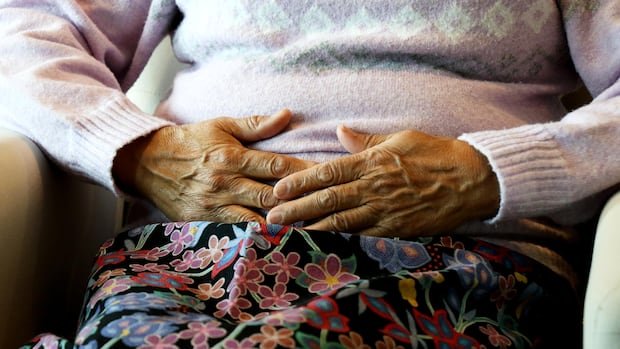

In Greenland, numerous Inuit women are now eligible for financial compensation following a long-standing Danish birth control initiative that forcefully inserted intrauterine devices (IUDs). This development has sparked optimism among Inuit women in Canada who have undergone similar experiences, hoping for acknowledgment and redress from their own government.
The Danish government recently approved a bill for compensation, about a year after the country’s prime minister expressed regret over the historical birth control program. A joint Greenlandic-Danish inquiry in 2025 revealed that between 1966 and 1991, approximately 4,000 Greenlandic women and girls, some as young as 12, were subjected to involuntary sterilizations, often without their consent.
Naaja Nathanielsen, a Greenlandic parliament member in Denmark, emphasized the lasting impact of this dark period on women throughout the country, causing significant trauma and influencing reproductive decisions even in present times.
The Danish government’s objective with the program was to lower birth rates and family sizes in Greenland. Women who received IUDs under this program are now entitled to a one-time payment of around $64,000 CAD. However, some Greenlandic officials feel the compensation is belated, emphasizing the urgency of acknowledging past wrongs.
In Canada, the recent actions by the Danish government have sparked hope that the Canadian federal government might follow suit. For years, numerous Indigenous women in Canada have been subjected to forced and coerced sterilizations, with instances continuing beyond the 1990s.
Reports from institutions like the Université du Québec en Abitibi-Témiscaminque and the Canadian Senate have documented cases of imposed sterilizations, indicating deliberate efforts to limit births in Indigenous communities through eugenics laws and government policies.
Cecilia Papak, an Inuk woman in Rankin Inlet, shared her experience of being coerced into sterilization in the late 1970s after being told by doctors that she needed a hysterectomy. She expressed disappointment in the government’s imposition on reproductive choices, highlighting the fear instilled in her regarding her own health and future.
Papak believes that without the coercion, she would have likely chosen to have more children. While the Canadian government has not officially apologized for the forced sterilizations, there is growing anticipation that the Danish government’s actions may prompt Ottawa to offer apologies and reparations.
Despite ongoing class-action lawsuits in Canada, including several against the federal government, and the recent criminalization of forced sterilization in the country, the journey towards rectifying past injustices continues. Høegh-Dam stresses the importance of mutual learning between Greenland and Canada, given the shared history of forced sterilizations, advocating for open communication and solidarity in addressing this global issue.