
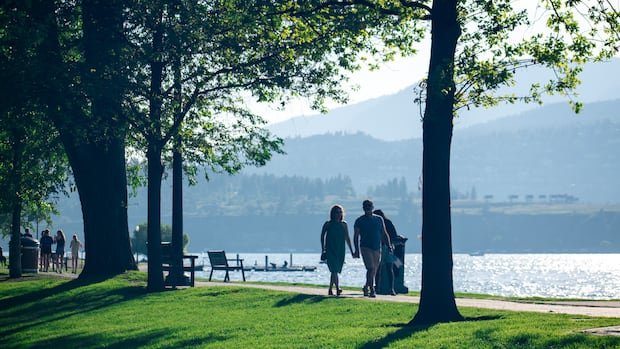

A new tool developed by the University of British Columbia is set to revolutionize urban tree planting practices in B.C. cities facing increasing summer temperatures. Known as CanopyFit, the pilot project utilizes mapping and modeling techniques to optimize tree planting locations for maximum cooling benefits.
By integrating CanopyFit data with heat maps and demographic information, researchers can pinpoint specific areas that require attention. The project’s primary objective is to enhance the effectiveness of planted trees, ensuring they thrive, grow larger, and endure longer, ultimately reducing costs and lowering temperatures through increased shade provision.
In Kelowna, CanopyFit identified neighborhoods like Rutland as top priorities for heat mitigation strategies. The project team, led by Melissa McHale, a forestry professor at UBC, conducts assessments to address potential challenges such as underground utilities and overhead wires that may impede tree planting.
Studies have shown that a 10% rise in tree canopy cover can lower perceived ambient temperature by approximately one degree, emphasizing the vital role of trees in climate adaptation and resilience efforts. The collaboration between UBC researchers, Diamond Head Consulting, and the City of Kelowna, initiated in 2022, has now expanded to Vancouver, where CanopyFit will be employed to evaluate future canopy growth.
Diamond Head Consulting, known for advising cities on green space preservation and urban development balance, recently crafted Kelowna’s Sustainable Urban Forest Strategy, adopted in 2024. The integration of research insights with practical urban forestry applications highlights the synergy between academia and policy implementation, fostering sustainable urban greenery initiatives.