
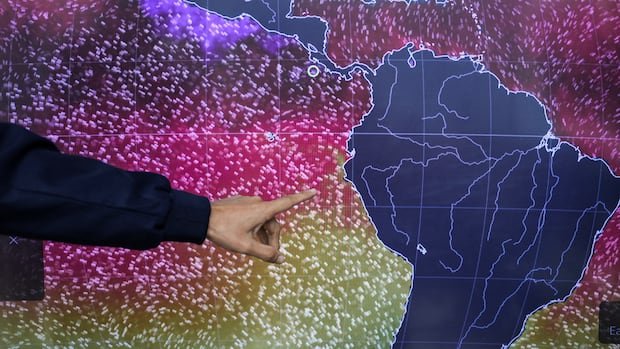

El Niño, a natural climatic phenomenon known for causing global temperature spikes at intervals, is projected by experts to reach its peak in several months and persist through the coming spring. Its impact is already being felt, affecting both weather patterns and human readiness. Below is a visual overview showcasing some of the current manifestations of El Niño.
### Panama Canal Water Levels Decrease
As a consequence of reduced rainfall associated with El Niño, water levels in Gamboa, Panama, are notably low, influencing ship transits through the Panama Canal. The Panama Canal Authority has limited daily transits starting in early September in anticipation of an extended El Niño season.
### Displacement of Seabirds
The increased warmth in the eastern Pacific caused by El Niño has led to a rise in the presence of seabirds, like blue-footed boobies, near the Panama Canal, affecting marine food supply.
### Preparations in Latin America
Across Latin America, governments are mobilizing efforts to combat the effects of a strengthening El Niño. Contingency plans are being activated, and measures are being taken to safeguard water, energy, and transportation systems from potential drought, extreme heat, and flooding.
### Indonesia’s Climate Challenges
In Indonesia, the impact of El Niño is evident as salt farmers in West Java benefit from a drought, while crop farmers face challenges from the intense heat. The country’s dry season is predicted to be more severe and prolonged due in part to El Niño.
### Global Implications
United Nations officials have issued warnings about the intensifying El Niño, which is expected to exacerbate extreme weather events worldwide. While not directly causing Indonesia’s wildfires, El Niño contributes to the conditions that facilitate their rapid spread.
### Canada’s Weather Outlook
Models indicate that Canada may experience a warmer winter attributed to El Niño, particularly affecting British Columbia with reduced precipitation and snowpack levels. Additionally, fewer tropical storms are expected in the Atlantic due to El Niño’s influence.
As El Niño continues to evolve, nations worldwide are bracing for its diverse impacts, emphasizing the importance of proactive measures and preparedness.