
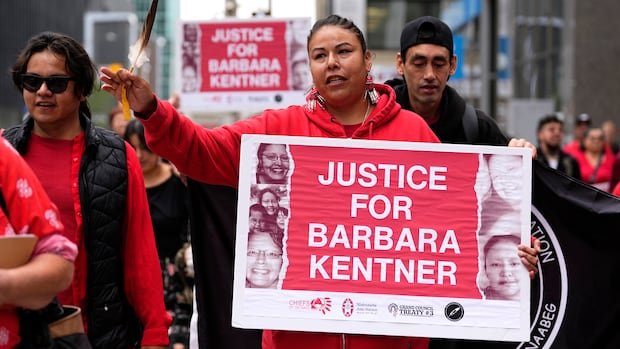

Family and associates of Barbara Kentner, along with First Nation leaders, marched in Ottawa on Monday to express concerns about the recent full parole decision for the individual convicted of manslaughter in Kentner’s death. Kentner, a 34-year-old from Wabigoon Lake Ojibway Nation, tragically passed away due to medical complications several months after being struck by a trailer hitch thrown by Brayden Bushby from a moving vehicle in 2017.
Recently, Bushby, now 27, was granted full parole under specific conditions on August 13, as indicated in documents obtained by CBC News from the Parole Board of Canada (PBC). This decision sparked outrage among Kentner’s family and supporters, with Connie Kentner, Barbara’s sister, expressing disappointment and concern during a media briefing prior to the Ottawa march, which drew around 30 participants.
The PBC’s parole decision documents justified Bushby’s release by stating that it would not pose an unreasonable risk and would aid in his reintegration into society as a law-abiding individual. However, Kentner’s family felt let down by a justice system that they believed should prioritize recognizing and respecting crime victims. They also highlighted their lack of prior notification by the PBC about Bushby’s full parole approval.
Previously, Bushby’s day parole, granted in August 2023, was revoked in July 2024 for violating conditions. Subsequently, he regained day parole in December 2025 for six months but was denied full parole. In June 2026, his day parole was extended.
During the Ottawa march, a representative from the PBC received a letter from Barbara’s family, emphasizing their ongoing advocacy for justice. The PBC expressed condolences for the family’s suffering but refrained from commenting on Bushby’s release due to privacy regulations. The board did, however, mention that registered victims have rights to information and participation in parole hearings.
In response to the family’s lack of awareness about the parole process, the PBC acknowledged the need for better communication and offered assistance with registration and inquiries. The board highlighted its members’ rigorous training in conducting comprehensive risk assessments, incorporating anti-racism and trauma-informed practices.
First Nation leaders, including representatives from Nishnawbe Aski Nation, Kitigan Zibi Anishinabeg, and the Assembly of First Nations’ 2SLGBTQQIA+ Council, joined the march to demand culturally sensitive support services for Indigenous victims and families navigating the corrections and parole system. Ogichidaa (Grand Chief) Francis Kavanaugh condemned the parole decision, citing systemic racism and advocating for justice for the victims of violence.
Connie Kentner reiterated her commitment to upholding her sister’s memory and seeking justice, emphasizing Barbara’s humanity and the need for accountability. The march aimed to raise awareness and push for reforms to ensure that families of victims are adequately supported and informed throughout the legal process.