
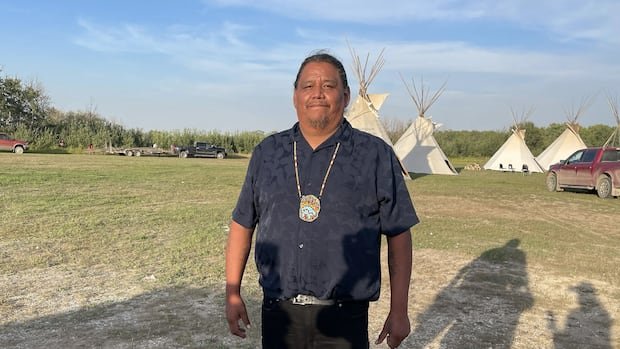

An emotional event took place at Kawacatoose First Nation on Friday as a stolen teepee cover was finally returned after being missing for a century. Tears were shed by community members as the teepee cover, crafted by Chief Cory’s great-great-grandfather, was unpacked and raised for a ceremonial gathering on the powwow grounds. The cover, which had not been seen by any family member since 1926, was recently discovered in the Smithsonian collection in Washington, D.C.
Chief Cory, along with family members and Indigenous studies professor Andrew Miller, made a 29-hour journey south to retrieve the precious artifact from the National Museum of the American Indian. The return of the teepee cover to its place of origin was a deeply emotional moment for the descendants of the creator, Sîpiskwêsîkan, also known as Dustyhorn.
The journey back home was eagerly awaited by the Kawacatoose community, with constant updates provided by Cory on their progress. The teepee cover, referred to as “moshum” meaning grandfather in Cree, symbolized the return of a stolen heritage to its rightful owners after a century of absence. The artifact will be displayed in Kawacatoose for four days before being transferred to the Royal Saskatchewan Museum in Regina.
The teepee cover holds significant cultural symbolism for the Kawacatoose First Nation, representing a connection to ceremonial practices that were once suppressed, leading to a loss of pride, language, and identity within the community.