
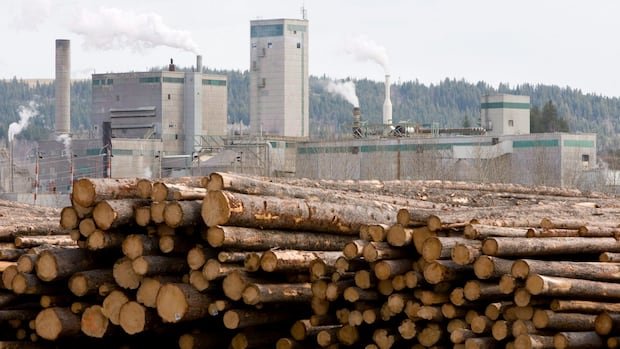

More than 20 lumber mills have shut down in British Columbia within the past three years, impacting billions of dollars in wood products due to U.S. tariffs. Canada has witnessed the loss of tens of thousands of jobs as a result.
The forestry industry in British Columbia is facing a critical situation, as highlighted by various sources. Recent U.S. tariffs have exacerbated the industry’s challenges.
The imposition of tariffs by the U.S. government on Canadian lumber is not a new development and dates back more than four decades. This ongoing dispute has significantly affected the forestry sector.
Softwood lumber, derived from coniferous trees like spruce, pine, and fir in Canada, plays a vital role in construction, furniture production, and various industries like pulp and paper. Statistics show that in 2024, nearly all of Canada’s wood production comprised softwood lumber, with a significant portion exported to the U.S.
The trade issue between the two countries stems from differences in logging access costs. Canadian producers pay stumpage fees for logging on public lands, while the U.S. relies more on privately-owned forests. This disparity has led to accusations of unfair subsidies and market advantages in the lumber trade.
The dispute between the U.S. and Canada over softwood lumber has a long history, with ongoing negotiations and trade agreements trying to address the concerns of both sides. Recent U.S. tariffs, including anti-dumping and countervailing duties, have added significant costs to Canadian softwood lumber exports.
The impact of the U.S.-Canada trade war on the forestry industry has been substantial, with additional tariffs imposed in response to national security concerns. These tariffs have raised the cost of Canadian softwood lumber significantly, affecting various wood products and industries.
The reaction to the tariffs is mixed in the U.S., with the lumber industry supporting them while others in the construction sector oppose the increased costs. The ongoing trade tensions have created uncertainty and challenges for both countries’ economies and industries.