
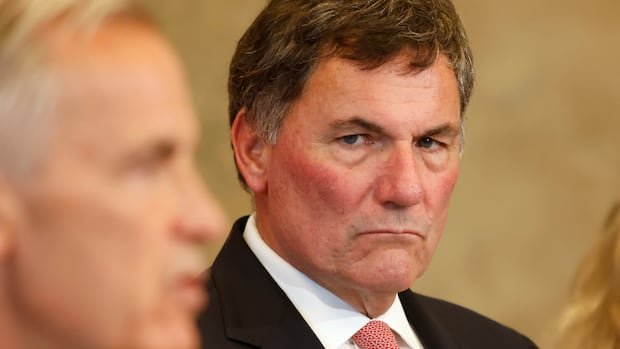

Canada’s Trade Minister Dominic LeBlanc expressed satisfaction with the United States retracting its stances on French language and culture following remarks by U.S. Trade Representative Jamieson Greer indicating that Canada’s streaming regulations are not a “red line” for the U.S.
LeBlanc stated that Canada appreciates the U.S. withdrawing its positions on discoverability and labeling, ensuring that measures supporting French language and Canadian culture will not face future U.S. trade actions. He emphasized the importance of constructive clarifications from the U.S. to pave the way for a trade agreement that upholds Canadian sovereignty.
Prime Minister Mark Carney instructed negotiators to cease discussions when the Trump administration raised concerns about culture, automotive industry, and sovereignty. The U.S. objected to Canadian subsidies for French culture, the presence of French-language media online, and the requirement for bilingual product labels in Canada.
In an interview, U.S. Trade Representative Jamieson Greer adjusted the U.S. stance on culture and language, acknowledging the significance of the French language in Canada. Greer indicated that the discoverability of French content on streaming platforms was a White House focus but not a deal-breaker. While advocating for capitalism’s role, Greer emphasized flexibility on French-language protections.
Following the breakdown of talks, the U.S. imposed 50% tariffs on various Canadian products, triggering Canada’s implementation of dollar-for-dollar counter-tariffs on over 700 U.S. imports. Despite the positive shift in language and culture discussions, Greer noted the stalled negotiations and the absence of current communication between the two sides.
U.S. Commerce Secretary Howard Lutnick criticized Carney for politicizing the situation by stepping away from negotiations, denying any discussions on French language or Quebec’s laws. Lutnick accused Carney of fabricating the issue to influence the upcoming Quebec election, a claim refuted by Carney and supported by Coalition Avénir Québec Leader Christine Fréchette.
The differing perspectives highlight the complexity of the trade dispute between Canada and the U.S., underscoring the challenges in reaching a mutually beneficial agreement while safeguarding cultural and linguistic interests.