
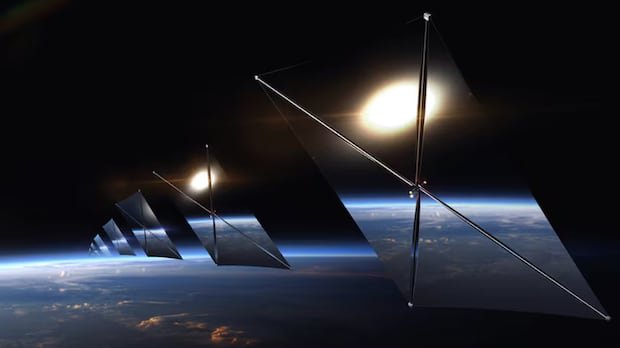

A group of astronomy experts and enthusiasts in New Brunswick are voicing their concerns over a U.S.-based company’s ambitious plan to utilize space mirrors to offer artificial sunlight for a fee. The company, Reflect Orbital, dubs its initiative “sunlight on demand” and envisions various applications such as supporting agriculture, enhancing solar power infrastructure, aiding search and rescue operations, and facilitating construction projects.
Mount Allison University astronomy professor, Catherine Lovekin, criticized the project, warning that it could have detrimental effects on ground-based astronomy and amateur stargazing due to the brightness of the proposed mirrors. Reflect Orbital, established in 2021, obtained approval from the U.S. Federal Communications Commission in July despite facing opposition from numerous individuals.
The company’s initial approval is for a single mirrored “demonstration” satellite to test the technology and safety measures. Reflect Orbital’s ultimate objective is to deploy 50,000 satellites by 2035 to reflect sunlight back to Earth over a distance of five kilometers, potentially affecting nighttime visibility for astronomical observations.
Lovekin emphasized the potential risks to natural cycles, including circadian rhythms and nocturnal ecosystems, posed by the project. Stéphane Picard, the owner of an astro-tourism organization in New Brunswick, echoed these concerns and highlighted the importance of preserving dark-sky sites for tourism and stargazing experiences.
Reflect Orbital defended its project, emphasizing that the artificial light would be targeted towards specific customers and regulated to minimize impacts on existing ecosystems and astronomical observations. Despite the company’s assurances, concerns have been raised by astronomy experts and organizations globally, including in British Columbia and Australia.
The United Nations Office for Outer Space Affairs acknowledged that current regulations do not prohibit placing reflective objects in orbit but stressed the need for international cooperation and consultation among states regarding such endeavors. The company’s proposal has sparked a debate on the potential consequences of introducing artificial light sources in space on both scientific research and natural environments.