
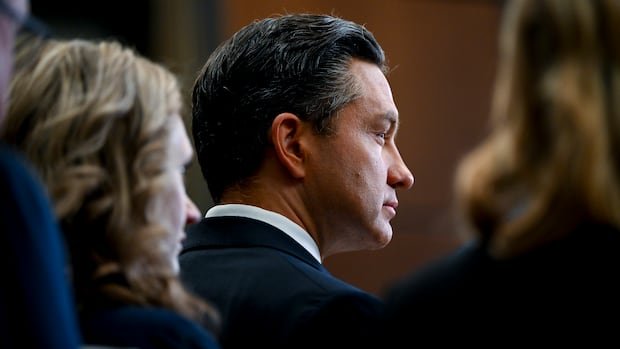

Conservative Leader Pierre Poilievre is set to urge Alberta to collaborate with other provinces to push for changes in federal policies that he believes are holding them back. In his upcoming keynote speech in Calgary, Poilievre will emphasize the importance of a united Canada for a stronger Alberta.
According to a preview of his speech provided by the Conservative Party, Poilievre will highlight that Albertans’ concerns are primarily directed towards the federal government rather than their fellow Canadians. The speech emphasizes the need to address issues such as resource access, pipeline development, firearms regulations, law enforcement, tax relief, provincial autonomy, and promoting free enterprise, all of which are key demands from Albertans.
Poilievre is expected to point out that provinces like Saskatchewan, Newfoundland and Labrador, Ontario, and Quebec can be valuable allies in advocating for these changes. These demands align with the priorities of the federal Conservative Party.
The speech asserts that all Canadians desire these improvements and emphasizes the importance of unity among provinces to achieve these shared goals. Poilievre will stress that the solution lies in reforming government policies in Ottawa rather than pursuing separation.
In a recent statement, Poilievre expressed his commitment to campaigning for Canadian unity in Alberta alongside other Conservatives. He underlined his dedication to promoting national cohesion and unity on a consistent basis.
Albertans are gearing up for a referendum this fall to decide on whether to proceed with a binding referendum on separation from Canada. Premier Danielle Smith has clarified that her support for the referendum is not a call for immediate separation but a step towards initiating the legal process required for a formal decision.
Smith’s decision to pursue the referendum followed a judicial ruling that invalidated a petition by the separatist group Stay Free Alberta due to legal errors and concerns about Indigenous treaty rights.
During a recent address to United Conservative Party supporters, Smith reiterated her belief in the potential of Canada and the benefits of staying united. She highlighted the significance of ongoing opportunities for Alberta, including potential developments like the construction of a new oil pipeline to the West Coast.
While Smith remains optimistic about the future within Canada, Poilievre has criticized the memorandum of understanding between Alberta and the federal government, questioning its effectiveness. Prime Minister Mark Carney has labeled Smith’s referendum initiative as risky and not aligned with the previous election platform of the United Conservative Party.
Recent polling data from the Angus Reid Institute in late May indicates that a higher percentage of Albertans would support a second referendum with a binding question on separation compared to a straightforward question on independence. This suggests differing sentiments among Albertans regarding the referendum process.