
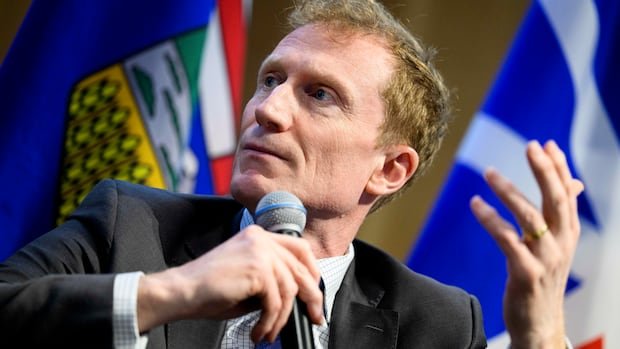

Canadian Identity Minister Marc Miller is upholding the composition and initial purpose of a faith advisory council that Prime Minister Mark Carney unveiled on Monday, despite facing criticism from Opposition Conservatives and the Jewish advocacy group B’nai Brith.
Miller, while en route to a cabinet meeting on Tuesday morning, engaged with journalists regarding the Ministerial Advisory Council on Rights, Equality, and Inclusion, emphasizing the importance of open and frank discussions to address issues faced by individuals who have encountered various forms of hate or have been strong advocates in their respective fields.
In a speech at a Toronto synagogue, Carney appointed former senator Marc Gold, who previously chaired the Jewish Federations of Canada, as a member of the council. Carney highlighted the failure of Canada’s civic compact to support the Jewish community, condemned antisemitism, and tasked the council with investigating the root causes of anti-Jewish sentiments.
The Prime Minister’s Office released a statement revealing additional council members, including former Canadian Armed Forces member Martine Roy, Olympic speedskater Catriona Le May Doan, former Liberal MP Omar Alghabra, Métis rights advocate Gary LaPlante, Simon Fraser University professor Aftab Erfan, and human-rights lawyer Avnish Nanda.
Critics, notably Conservative Leader Pierre Poilievre, raised concerns about Alghabra and Nanda’s inclusion on the council. Poilievre questioned Alghabra’s suitability for combating antisemitism due to his past associations, while also criticizing Carney’s approach of forming new councils in response to challenges.
B’nai Brith Canada expressed doubts about the council’s ability to effectively combat antisemitism, citing concerns about its expertise and authority. The organization questioned the council’s delayed establishment and its capacity to fulfill its mandate.
While Carney initially emphasized the council’s focus on fighting antisemitism, the council’s broader mandate, announced in February, includes addressing various forms of racism and hate, such as Islamophobia. The council aims to bridge communities and combat all forms of discrimination by leveraging input from diverse leaders across different sectors.
The ongoing debate surrounding the council underscores the complexity of addressing hate and discrimination in Canadian society, with stakeholders expressing varying opinions on the council’s composition and effectiveness.