
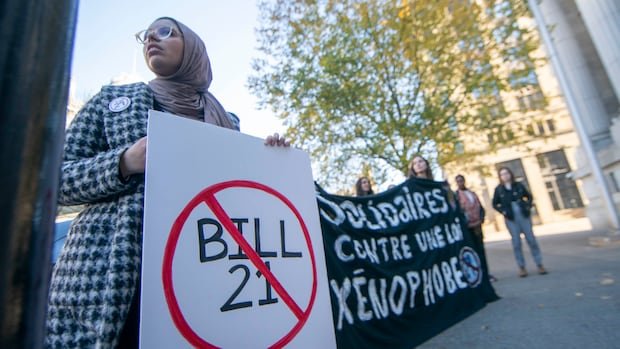

The upcoming legal battle over Quebec’s secularism law, Bill 21, at the Supreme Court of Canada has transformed from a dispute about teachers wearing hijabs in classrooms to a discussion about the authority to determine fundamental rights and freedoms in Canada: courts or elected legislatures. This issue is gaining importance as some Canadian provinces are also suspending constitutional rights.
University of Ottawa law professor Errol Mendes emphasized the significant implications this case holds for the entire country. The arguments before the Supreme Court are scheduled to commence on March 23, with various parties including Quebec’s attorney general, teachers, religious and civil rights groups, representatives from five other provinces, the federal government, and numerous intervenors presenting their perspectives.
At the core of the debate lies the notwithstanding clause, outlined in Section 33 of the Canadian Charter of Rights and Freedoms, which plays a critical role in determining the standards of right and wrong within the country. Former Quebec Liberal MNA and MP Clifford Lincoln, who has a history of resignation over the notwithstanding clause, expressed concerns over its utilization.
Bill 21, a culmination of a prolonged debate on secularism in Quebec, prohibits certain public servants from wearing religious symbols while on duty. The controversial law, which triggered protests and opposition from various groups, was unique in how the notwithstanding clause was embedded preemptively in the legislation, aiming to shield it from legal challenges. This approach has been emulated by other provinces, notably Alberta, Saskatchewan, and Ontario, in different contexts.
While the case won’t focus on whether Bill 21 breaches Charter rights, it will examine the legality of Quebec’s proactive use of the notwithstanding clause. The arguments put forth by Quebec and other defending provinces emphasize the absence of specific constraints in the Charter regarding the clause’s preemptive application. Critics raise concerns about the potential long-term implications of suspending rights under the clause.
As the Supreme Court deliberates on this critical matter, the outcome of the Bill 21 case will have far-reaching consequences on future legislation and the balance of power between courts and elected bodies in Canada. Despite the prevailing belief among legal experts that Bill 21 may survive the challenge, there is hope that the court could provide clarity on the use of the notwithstanding clause, prompting governments to exercise caution in its preemptive invocation.