
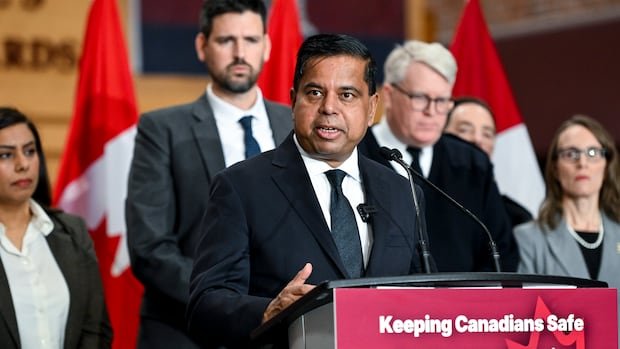

The Canadian Liberal government has put forward a new lawful access bill aimed at assisting law enforcement agencies in tracking individuals potentially utilizing social media or artificial intelligence tools to engage in criminal activities or pose threats to national security.
This legislative proposal follows the previous Bill C-2, which raised concerns among civil liberties groups for its perceived expansive powers. Public Safety Minister Gary Anandasangaree emphasized that the new bill, named Bill C-22, aims to modernize the country’s lawful access laws to align with international standards.
The bill is designed to strike a balance between law enforcement needs and the privacy rights demanded by Canadians, according to Anandasangaree. He clarified that the legislation is not intended for widespread surveillance of citizens but rather to enhance online safety for Canadians.
Government officials clarified during a technical briefing that Bill C-22 does not grant law enforcement or security agencies access to individuals’ browsing history, private social media data, messages, or emails. Instead, it is limited to information that can identify individuals and their locations.
Under the proposed legislation, security services will have the authority to compel telecommunication companies like Bell and Rogers to confirm whether a suspected criminal uses their services. To obtain further information, such as email addresses or phone numbers, law enforcement must obtain a warrant by demonstrating to a court that a crime has occurred or is likely to occur.
Moreover, the bill formalizes the process for Canadian law enforcement to request information from foreign social media platforms and artificial intelligence companies without mandating the sharing of subscriber identification information. The framework encourages cooperation between these companies and law enforcement agencies.
The legislation does not require AI or social media firms to report suspicious activities to Canadian authorities. Law enforcement agencies aim to access information such as IP addresses of individuals using fake identities on social media for criminal purposes.
Additionally, the bill empowers the government to introduce regulations mandating “core providers,” including telecoms and satellite providers, to maintain the capability to track users geographically. This measure aims to enhance national security efforts by facilitating the tracking of suspects and potential threats.
Minister of Justice Sean Fraser highlighted the importance of unmasking individuals behind accounts that pose public safety risks. The legislation also grants the Minister of Public Safety authority to issue orders compelling electronic service providers to develop specific capabilities, subject to approval by the intelligence commissioner.
The proposed changes are intended to enhance emergency services’ ability to locate and assist individuals in distress promptly. Companies that fail to comply with ministerial orders could face fines or administrative penalties, as outlined in the legislation.
The rocky legislative journey leading to Bill C-22 involved the reevaluation and reintegration of certain provisions from Bill C-2 following concerns raised by civil society organizations. The government’s efforts reflect a commitment to balancing security priorities with privacy and civil liberties.
Overall, the proposed lawful access bill represents a comprehensive effort to strengthen law enforcement capabilities while upholding the fundamental rights and privacy expectations of Canadians.