
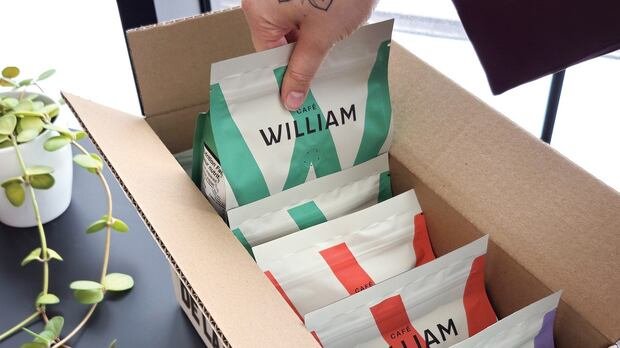

A coffee roaster in Eastern Townships is moving its production back to Quebec after a significant ruling by the U.S. Supreme Court invalidated controversial “reciprocal” tariffs. Café William, which has been in operation in Quebec for nearly four decades, is relocating its operations to Sherbrooke, Quebec. This decision marks a shift from the company’s strategy last year to navigate the trade conflict.
Rémi Tremblay, the president and CEO, stated that due to high tariffs in the food industry, particularly at 25 to 35 percent where profit margins are slim, the company had to find a solution. The U.S. market constituted a significant portion, around 30 to 40 percent, of the roaster’s business.
To circumvent the reciprocal tariffs introduced by the Trump administration, Café William entered into a cross-border partnership with a roaster in New Jersey. The agreement allowed the American partner to handle roasting and packaging for Café William’s U.S. customers, while the Sherbrooke facility managed the Canadian clientele of the partner.
Following the U.S. Supreme Court’s decision to strike down the duties, Café William is now in the process of transitioning back to its home base. The company mentioned that during the shift, they utilized work-sharing programs to avoid permanent layoffs. They also reported that their current business volume exceeds pre-trade war levels and they are looking to fill approximately 20 positions.
Although the roaster is optimistic about its prospects, industry experts caution that the manufacturing sector as a whole remains uneasy. The ongoing instability has led many companies to rethink major investments in Quebec. Véronique Proulx, the head of the Quebec federation of chambers of commerce, highlighted the uncertainty faced by firms and the need for government support to bolster business confidence.
As the industry navigates this period of flux, the future of cross-border manufacturing models and trade negotiations under the Canada-U.S.-Mexico Agreement (CUSMA) remains uncertain. The impact of tariffs and the evolving trade landscape continue to shape the decisions of businesses in the region.