
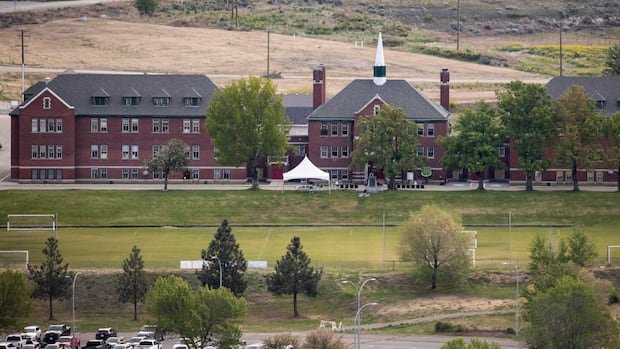

In the investigation at the former Kamloops Indian Residential School by Tk̓emlúps te Secwépemc, certain areas on the grounds have been eliminated as potential sites for unmarked graves, while data from various surveys has pinpointed other areas as the new main focus for the search. Nearly five years ago, the First Nation disclosed initial findings from a ground-penetrating radar survey indicating around 200 potential unmarked graves on the school premises, sparking a nationwide movement among First Nations and non-Indigenous Canadians to acknowledge the atrocities committed at these institutions.
Tk̓emlúps te Secwépemc stated that the investigation has proven to be more intricate than initially anticipated. They are constantly evolving their methods and information as progress is made. The investigation has utilized ground-penetrating radar, LiDAR technology for 3D mapping, and specialized dog teams trained to detect historical human remains. The findings from these methods have converged in several areas that will now be the prime focus of the investigation, although specific locations were not disclosed.
Additionally, surveys have identified areas with signatures resembling burials, while ruling out other locations. Tk̓emlúps te Secwépemc has faced challenges accessing historical records from the Catholic Church and the provincial and federal governments, which managed the residential school until its closure in 1978. The nation has raised concerns over government restrictions and delays hindering their access to these critical documents.
CBC News has reached out to Canada’s Ministry of Crown-Indigenous Relations for a response to the nation’s assertions. The debate over excavating former residential school sites remains contentious, with some survivors advocating for undisturbed resting places, while others believe exhumation could provide closure and proper burial for victims. More than 150,000 Indigenous children were compelled to attend residential schools between the 1870s and 1997, with an estimated 4,100 recorded deaths at these institutions, although the actual toll is presumed to be higher.
Tk̓emlúps te Secwépemc emphasized that if any ancestral remains are discovered, they will seek consensus with the many First Nations whose ancestors were associated with the school. Each nation upholds its distinct cultural and spiritual traditions for handling ancestral remains, recognizing that complete consensus may prove elusive. Support services are available for those affected by residential schools or intergenerational trauma through the national Indian Residential School Crisis Line at 1-866-925-4419.