
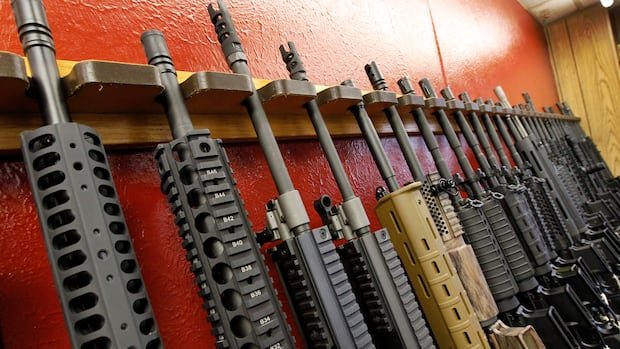

The Brantford Police Service has announced its decision not to take part in the federal government’s gun buyback program to collect assault-style firearms from the public. In a statement released on Monday, the service clarified that it will not offer firearm collection or storage appointments as part of the initiative, emphasizing that local police services are not required to participate in the program.
Brantford police reiterated their commitment to focusing on frontline policing activities such as emergency response, criminal investigations, crime prevention, and victim support services. They emphasized that these priorities are crucial for maintaining community safety and effective law enforcement in the City of Brantford.
While Ottawa has banned approximately 2,500 makes and models of what it terms as “assault-style” firearms since 2020, the Assault-Style Firearm Compensation Program is now in place to provide compensation to individuals who register and surrender their prohibited firearms. It is important to note that assault-style rifles differ from assault rifles, which are military-grade fully automatic firearms like M-16s, AK-47s, and C7s that are prohibited in Canada.
The AR-15, XM-15, and AR-57 are some examples of assault-style rifles covered by the ban. The AR-15, in particular, has been associated with several mass shootings in the United States. Canadians have until March 31 to express their interest in participating in the compensation program. Failure to comply before the deadline may result in criminal liability for illegal possession of prohibited firearms.
Compensation payments for surrendered firearms will be processed within 45 business days upon successful validation. The program has allocated $248.6 million to cover approximately 136,000 outlawed firearms, with compensation being distributed on a first-come, first-served basis.
Opposition to the buyback program has arisen from some gun owners and the Conservative Party of Canada, who argue that it unfairly targets law-abiding gun owners without enhancing public safety. The governments of Alberta, Saskatchewan, and Yukon have openly opposed the program, citing concerns over its impact on individuals in remote areas who rely on assault-style firearms for protection against wildlife threats.
On the other hand, supporters of the program believe it is a necessary measure to remove assault firearms from circulation. Advocates like Ken Price from Danforth Families for Safe Communities in Toronto express support for the initiative, emphasizing the importance of law enforcement’s cooperation in ensuring compliance with firearm regulations.
In conclusion, the federal gun buyback program continues to generate debate among various stakeholders, with differing views on its effectiveness and implications for public safety and individual rights.